
A sodium-ion residential battery offers 9.7kWh of rated energy, a 48V-class architecture and compatibility with hybrid inverters, while its manufacturer promotes long cycle life and thermal stability.
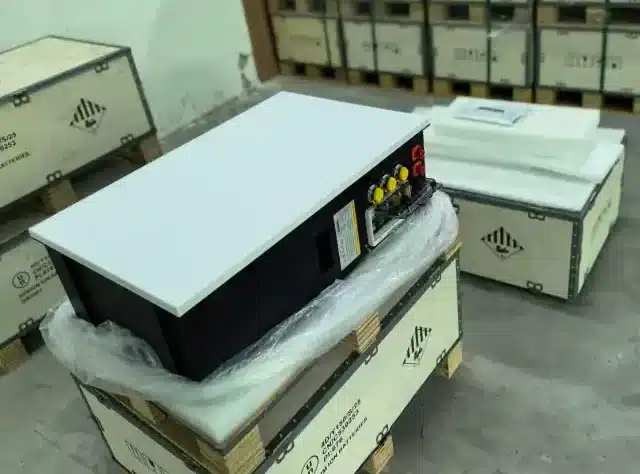
A new sodium-ion residential battery is now available from a warehouse in Poland, adding another option for home energy storage alongside established lithium-ion systems. Developed by Bulgaria-based AuroraCell, the battery uses sodium-ion chromium oxide (NCO) chemistry and is designed to work with 48V-class hybrid inverters. The company announced that stock had arrived in Poland on 1 October 2026, allowing homeowners and installers to discuss orders and delivery arrangements.
The system was reported at launch as the AuroraCell 9.7kWh–48V residential energy storage system (RESS). According to specifications published by ESS News on 7 October, it has a rated energy capacity of 9.744kWh, a nominal capacity of 210Ah and a nominal voltage of 46.4V. Its operating voltage range is 32V to 54.4V. However, AuroraCell’s current residential energy storage datasheet page now describes the system as a 9.3kWh unit, so buyers should confirm the exact specification of the version being supplied.
The battery uses sodium ions to carry charge and a chromium oxide-based cathode. AuroraCell presents its NCO chemistry as an alternative designed to prioritise cycle life, thermal stability and operation across a broad temperature range. These characteristics are relevant to stationary storage, where batteries may undergo regular charging and discharging to store surplus solar electricity for later household use.
One of the headline specifications reported at launch is a claimed cycle life of 20,000 cycles at 100 per cent depth of discharge and 25°C. The battery also comes with a reported 20-year warranty. However, the cycle-life figure should be treated as a manufacturer claim rather than an independently verified result. AuroraCell’s own website now advertises a projection of more than 30,000 cycles, while explicitly stating that this figure is based on cell-level test data and is not the result of a completed 30,000-cycle test of the residential system. The company also describes a potential service life of 25–30 years as an expectation, not a warranty duration.
The battery’s published electrical specifications list standard and maximum charging rates of 0.5C, along with a standard discharge rate of 0.5C. Its maximum discharge current is specified as 150A between 0°C and 60°C. The reported discharge temperature range extends from -40°C to 60°C, while charging is permitted between 0°C and 60°C. These are manufacturer specifications, and actual performance will depend on operating conditions and the installed system configuration.
The enclosure measures 483mm × 254mm × 754mm and weighs 110.5kg. It carries an IP65 rating and supports parallel connections, allowing installers to expand storage capacity by connecting compatible units. Its weight means that installation planning must account for suitable mounting or floor support, access and electrical protection.
AuroraCell lists compatibility with hybrid inverter platforms from Victron Energy, Deye, Solis, Growatt, Schneider Electric, SMA, Sungrow, Sofar Solar, Studer and Ingeteam. Other inverter brands may be supported on request. Nevertheless, installers should verify model-specific compatibility, communications settings and charging limits before integrating the battery into an existing solar installation.
The company describes the system as having an ultra-safe design that combines its sodium-ion chemistry with an integrated battery management system and passive thermal design. However, such descriptions should not be interpreted as proof that fire or other battery hazards are impossible. AuroraCell’s published material lists UL9540A, UN38.3, material safety data and CE among its compliance-related references, although the available launch report does not provide enough detail to establish the scope of each listing.
Sodium-ion batteries use sodium rather than lithium to carry charge. Sodium is widely available, making the chemistry attractive for manufacturers seeking alternatives to lithium-based energy storage. However, the suitability of any battery depends on more than its chemistry: usable capacity, round-trip efficiency, purchase price, warranty conditions, installation requirements and independently verified lifetime performance all influence its practical value.
For now, the new residential system offers a further sodium-ion option for European home energy storage, particularly installations using compatible low-voltage hybrid inverters. AuroraCell has confirmed stock in Poland, but pricing and detailed commercial terms were not provided in the cited announcement. The differing capacity and cycle-life figures across its current website and the launch report also make it important for prospective buyers to obtain the latest product datasheet before ordering.
For more information, click here.