

A flexible coating made from liquid gallium and carbon nanotubes killed more than 80 per cent of tested bacterial cells within three hours after receiving a one-minute electrical stimulus from a 9V battery.
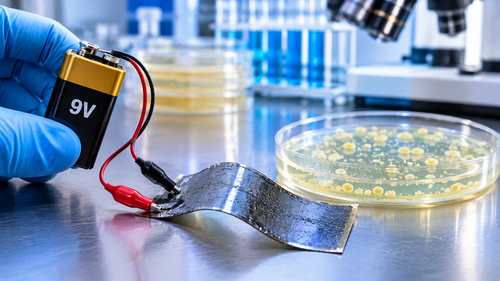
Cracks in a coating are usually considered a defect. Researchers at Flinders University in Australia, however, have found a way to use them to create a flexible film that can be activated with a 9V battery to kill bacteria.

According to the university, a one-minute electrical stimulus from a standard 9V battery killed more than 80 per cent of the bacterial cells tested within three hours. The tests involved methicillin-resistant Staphylococcus aureus (MRSA) and Pseudomonas aeruginosa, both associated with difficult-to-treat infections.
The coating combines liquid gallium, a metal that melts close to room temperature, with carbon nanotubes. As the material dries, microscopic cracks form across its surface. Rather than regarding such cracks as imperfections, the researchers used them to create what they termed stress-programmed microcrack networks.
The researchers propose that the edges and junctions of these cracks concentrate the electric field, creating localised hotspots that may enhance the coating’s antibacterial activity. Atmospheric plasma generation was also carried out using the material in independent tests, generating reactive species capable of inactivating bacteria.

Associate Professor Vi Khanh Truong, who led the research at Flinders University’s Biomedical Nanoengineering Laboratory, highlighted the ability to activate the coating when required. The approach could allow an antimicrobial response to be “switched on when needed”.
These findings are based on experimental testing and there are a few aspects that have not yet been clearly established. While the scientists used conductive clips to connect the coating to a 9V battery, the actual current used is not stated. In the experiment, the control samples which were not stimulated had cell death rates of 65 per cent for Pseudomonas aeruginosa and 72 per cent for MRSA. Electrical stimulation increased the rates to above 80 per cent for Pseudomonas aeruginosa and above 85 per cent for MRSA. HaCaT human skin cell testing has shown cell growth and attachment.
Potential applications include smart wound dressings and wearable patches that could monitor health signals, such as heart or muscle activity, while also helping prevent infections. The technology is currently at the research stage though. As Truong put it, “There’s still more work to do before this reaches patients.”
There are also concerns related to antimicrobial resistance in India; the Indian Council of Medical Research (ICMR) monitors patterns of resistance through its antimicrobial resistance surveillance network and issues annual reports. However, there are no Indian scientists mentioned in this research announcement, nor any details on production costs or availability of the product commercially. The use of the technology in Indian hospitals needs further exploration.
For more information, click here.