

This startup has developed a computer vision-based machine that inspects fruits, grades and sorts them by quality, and identifies and separates defective produce directly on farms. Could this be a significant advancement in post-harvest processing?
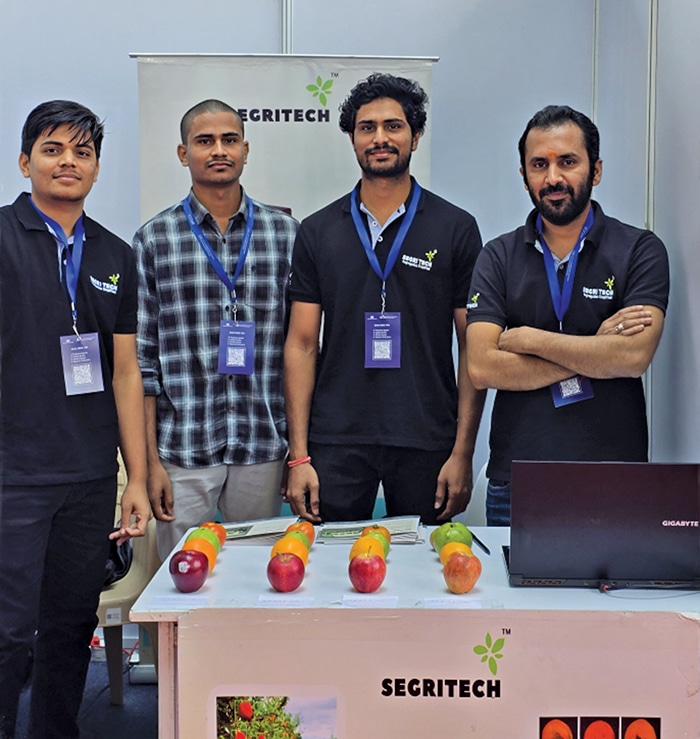
The idea for the startup came from a problem Hetendra Singh Rathore, Vijay Pratap Singh, and Sri Kusulu Devalla faced while running their earlier supply chain business for fresh fruits and vegetables. Every fruit had to be sorted by hand, which took time, required significant manual labour, and made it difficult to handle large orders. After Covid-19 affected their business, they decided to solve this problem instead. They started working on a machine that could sort and grade fruits automatically and founded Segritech in 2022. After three years of research and development, they launched their machine to sort and grade fruits and vegetables at the farm level, helping farmers process their produce before it reaches the market.
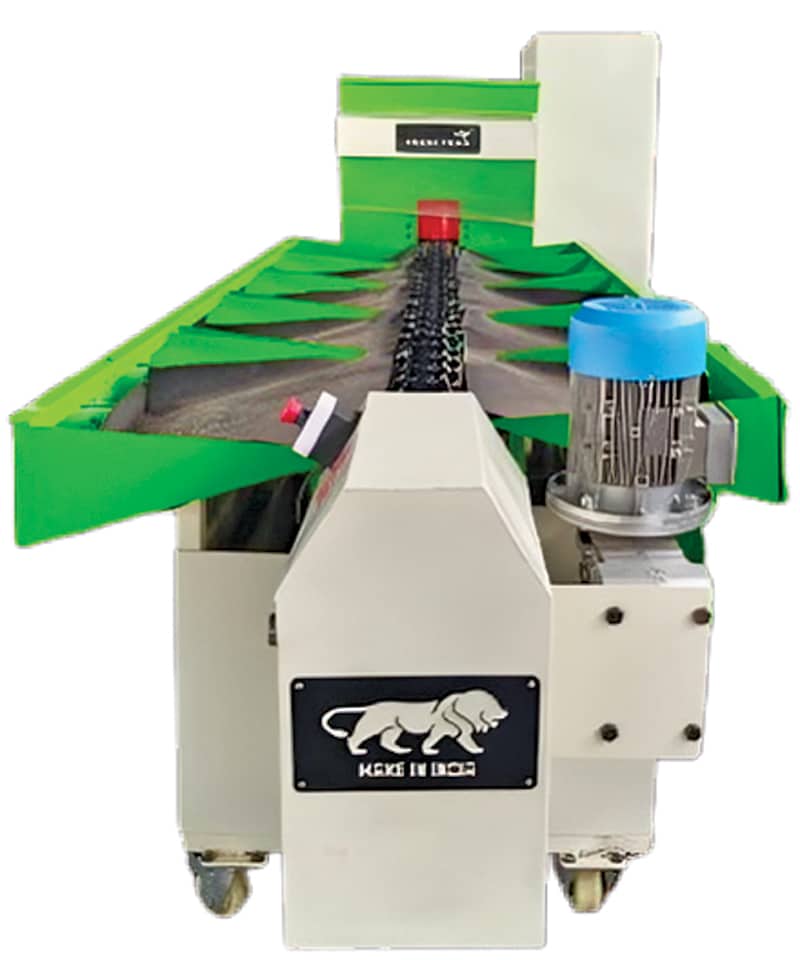
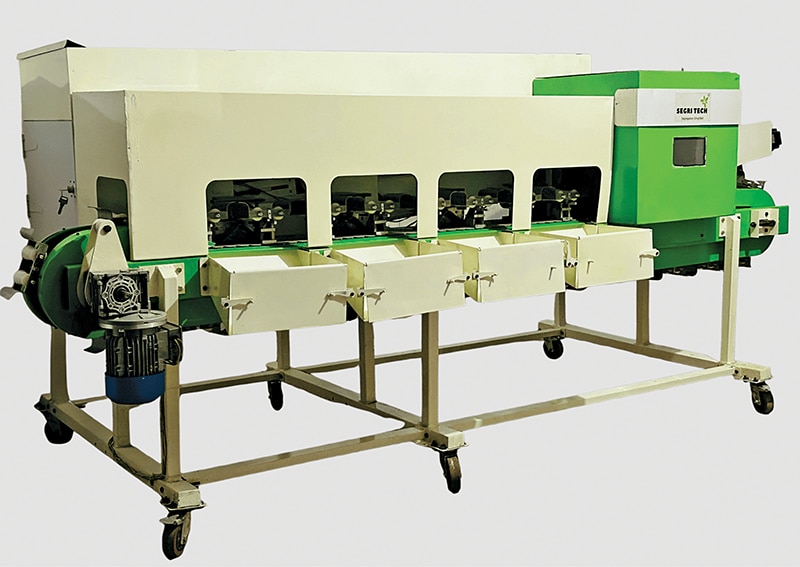
Most sorting machines are designed for factories and are expensive. Segritech built a compact and portable machine that can be moved from one farm to another. The machine measures about 10 feet by 5 feet (3m×1.5m approx.) and is designed for farmers and local traders.
“The process is simple. Farmers load the produce into the machine, and each fruit passes through a camera chamber where it is rotated so that the system can inspect nearly the entire surface,” says Kusulu.
The machine can sort about two tonnes of produce per hour.
“Our machine uses computer vision models to analyse images captured by cameras. The software checks each fruit for parameters such as size, shape, colour, surface defects, and some visible diseases. Based on this analysis, it assigns a grade, and actuators automatically direct the fruit to the correct output tray. The system runs on Nvidia processors and, in some configurations, PLCs, while photoelectric sensors help track the position of each fruit during inspection,” adds Kusulu.
Speaking about the challenges of designing and developing the machine, Kusulu explains, “In the early stages, one of our biggest challenges was image processing. We wanted to keep the machine compact, affordable, and suitable for farmers, so we initially used lab-scale electronics to test the system. We later shifted to industrial-grade Nvidia GPUs, which gave us the computing power needed to process images faster and increase the machine’s sorting speed. Building the hardware was another challenge because the machine uses many different components. We had to work closely with multiple vendors and source all the required parts before we could develop the complete system in-house.”
The company continues to improve its computer vision models by collecting new images from the field, labelling the data, and retraining the models regularly to improve grading accuracy.
Speaking about the company’s manufacturing setup, Kusulu discloses, “We follow a mix of in-house and outsourced manufacturing. We make some components, such as 3D-printed parts and actuator-related parts, in-house, while other components are sourced from vendors in Hyderabad and Ambala. The final assembly of the machine is done at our assembly unit in Hyderabad, which is also our headquarters.”
The startup has also received support from the government of India. Kusulu adds, “We have received grants from the Ministry of Agriculture under the Pusa Krishi programme, the Ministry of Electronics and Information Technology (MeitY), and the Department of Science and Technology (DST).”
To reach farmers, the company works through networks connected with the Pusa Krishi programme, Krishi Vigyan Kendras, and NGOs involved in farming and agricultural development. It has also built connections with farmer producer organisations and farmer groups. The company is well connected with IIT Bombay, the International Institute of Information Technology Hyderabad, and Vellore Institute of Technology for technical support. On the agriculture side, it also works with the Indian Council of Agricultural Research, the Indian Agricultural Research Institute, Pusa, and the National Institute of Food Technology Entrepreneurship and Management for guidance on agriculture and food technology.
For future growth, the company plans to scale its existing sorting and grading solutions to reach more farmers while continuing research and development on new post-harvest automation solutions.