




Cummins has introduced a 5 MWh battery energy-storage system designed to rapidly respond to changing power demands and help data centers manage fluctuating loads.
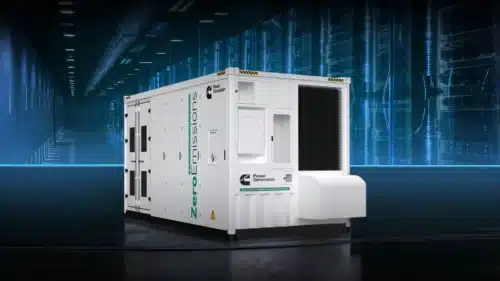
The growing demand for AI and data-center computing is putting increasing pressure on power infrastructure. To address these fluctuations, Cummins has introduced a battery energy-storage solution designed to respond quickly to changes in electricity demand.
The system is intended to support data centers by rapidly charging and discharging when power requirements change. This can help smooth sudden increases or decreases in demand and provide additional flexibility for facilities with large and variable electrical loads.
5 MWh built for resilience
The article explains that Cummins launched its BESS solutions in May 2025 as part of its expansion into energy storage. The systems are intended for applications ranging from bridge-to-grid power and peak-demand management to larger microgrid networks.
The BESS package includes safety and grid-integration standards and is designed to provide a flexible way for data-center operators to manage their power infrastructure.
Batteries smooth AI power swings
AI data centers can create particularly demanding power profiles because computing workloads can change rapidly. Battery storage can act as a buffer between these changing loads and the electricity grid.
By charging when demand is lower and discharging when demand rises, the battery system can help smooth power fluctuations and reduce stress on the grid. This could be especially useful as AI-related data-center capacity continues to expand.
Overall, the technology highlights the growing role of battery energy storage in supporting data-center reliability, peak-demand management, and grid stability.

