




Rohde & Schwarz and Qualcomm have verified a 5G power-saving feature, supporting standards work and more efficient testing of next-generation mobile devices across future networks.
Rohde & Schwarz, in collaboration with Qualcomm Technologies, has achieved initial verification of the 3GPP Release 17 Search Space Set Group Switching (SSSG) power-saving feature for 5G New Radio devices. The milestone demonstrates early conformance testing of a feature designed to reduce device power consumption while maintaining reliable reception of scheduling information.
SSSG is intended to improve power efficiency by optimising how a device monitors the physical downlink control channel (PDCCH). By reducing unnecessary monitoring activity, the mechanism can lower power consumption without compromising the device’s ability to receive relevant network control information.
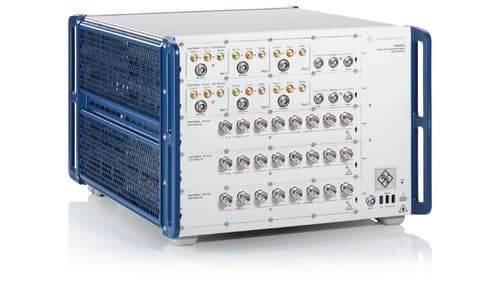
The verification was carried out using a mobile test platform based on the Qualcomm X115 5G Modem-RF, together with the R&S TS-PCT protocol conformance test platform, which is based on the CMX500 5G one-box signalling tester. The companies completed the 3GPP RAN5 NR conformance test case TS 38.523-1 TC 7.1.1.12.5 for SSSG at an early stage of the feature’s development.
According to the companies, the verification covers the relevant test aspects for the conformance case and provides early readiness information for the wider 5G ecosystem. Such testing can help device manufacturers and chipset developers identify implementation issues before products progress further towards commercial deployment.
The verification process also identified areas where the underlying conformance specification could be improved. Rohde & Schwarz and Qualcomm supported the submission of a change request to 3GPP RAN5, linking practical test results with ongoing standards development.
The work highlights how protocol conformance testing can contribute not only to product validation but also to improving future specifications. For manufacturers, chipset developers and certification organisations, early verification could help establish more reliable testing procedures for advanced 5G power-saving capabilities.
The companies’ work is expected to support continued development and commercial testing of Release 17 features as 5G networks and compatible devices evolve.

