





Researchers at the University of Minnesota have developed a high-efficiency superconducting diode for quantum computing and artificial intelligence (AI) enhancement.
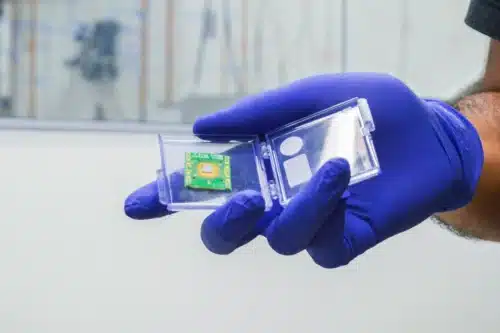
A diode permits current to flow in one direction while blocking it in the opposite direction within an electrical circuit. It functions as half of a transistor, a crucial component in computer chips. While diodes are typically crafted using semiconductors, researchers are exploring the possibility of using superconductors to create diodes. Superconductors possess the remarkable capability of transferring energy without losing power during transmission.
Researchers at the University of Minnesota Twin Cities have created a superconducting diode. This significant advancement in electronic device components enables quantum computer expansion and enhances artificial intelligence (AI) performance. The device surpasses other superconducting diodes in energy efficiency, multitasking capability, and integration of energy flow control gates.
The device employs three Josephson junctions consisting of superconductors sandwiching non-superconducting materials. By utilizing layers of semiconductors, the researchers established connections between the superconductors. This unique device design enables the researchers to control its behaviour using voltage.
In contrast to typical diodes that can only handle one input and one output, the new device can process multiple signal inputs. This feature holds potential applications in neuromorphic computing, which involves engineering electrical circuits to emulate the functionality of neurons in the brain. By leveraging this technology, the performance of AI systems can be significantly enhanced.
The device exhibits energy efficiency close to the highest levels ever demonstrated. For the first time, the researchers have shown the capability to incorporate gates and apply electric fields to fine-tune this effect. In contrast to the other superconducting devices, this new device employs materials more compatible with industrial production processes while introducing novel functionalities. The approach employed by the researchers has the potential to be applied to any superconductor, rendering it more versatile and user-friendly compared to other techniques within the field. This quality makes their device highly compatible with industrial applications and could facilitate the scaling up of quantum computer development for broader utilization.
Many researchers are exploring algorithms and potential applications for computers or AI systems that have the potential to surpass classical computers. The research focused on developing the hardware enabling quantum computers to implement these algorithms.
Reference: “Gate-tunable superconducting diode effect in a three-terminal Josephson device” by Mohit Gupta, Gino V. Graziano, Mihir Pendharkar, Jason T. Dong, Connor P. Dempsey, Chris Palmstrøm and Vlad S. Pribiag, 29 May 2023, Nature Communications.
DOI: 10.1038/s41467-023-38856-0

