




Researchers have developed a soft robotic hand that delicately handles eggs while lifting heavier objects using AI-designed materials and 3D printing methods for greater flexibility.
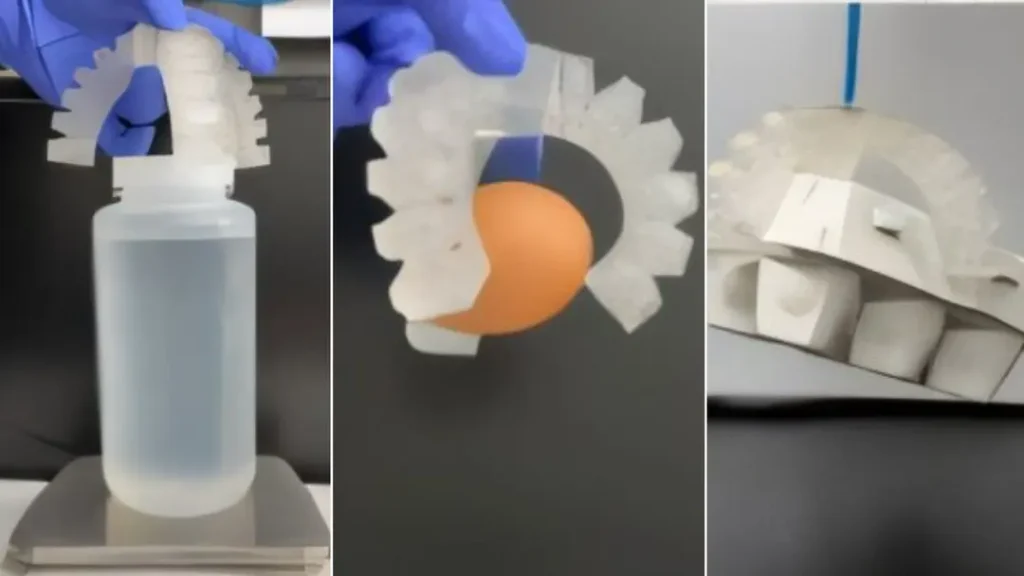
Researchers at the Korea Advanced Institute of Science and Technology (KAIST), working with partner institutions, have developed a soft 3D-printed robotic hand capable of handling fragile eggs while lifting a 1kg water bottle. The system combines artificial intelligence (AI)-assisted material design with pneumatic soft actuators to achieve both delicacy and strength.
The hand uses a specially formulated resin developed through an AI-based material design process. Researchers trained the model using data on chemical formulations, allowing it to identify a balance between chemical components that would provide elasticity without sacrificing durability.
This approach addresses a major challenge in digital light processing (DLP) 3D printing. Highly elastic materials can become too viscous for reliable printing, while formulations that flow more easily may lack the durability required for repeated movement. The AI system helped identify a formulation that could stretch to more than six times its original length without tearing.
The resulting material was used to create small pneumatic actuators. When filled with air, these hollow structures expand and bend, allowing the printed components to move in a manner similar to human fingers.
When combined into a complete robotic hand, the actuators enabled it to grip objects with significantly different characteristics. Demonstrations included computer mice, egg cartons, slick glass bottles and fragile eggs, showing how the hand can adjust its grip without applying excessive force.
The researchers believe the technology could help expand the use of soft robotics in manufacturing and other fields. Its AI-driven design process could also reduce years of manual material testing by predicting suitable formulations for specific applications.
Beyond robotic grippers, the researchers expect the approach to support the development of wearable devices and customised medical equipment, where flexible, durable and precisely manufactured materials are particularly important.

