What if robots never had to stop and think? A new AI method lets them plan the next move while moving, reducing delays.
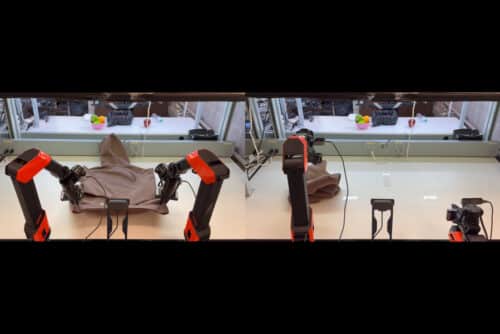
Researchers at MIT have developed a new artificial intelligence (AI) technique that enables robots to plan their next move while carrying out the current one. This reduces delays between actions, resulting in smoother movements and faster responses without increasing computing requirements.
The new system, called VLASH, allows a robot to predict its future position and use that prediction to prepare its next set of movements in advance. Unlike robot control methods that pause after every action to calculate the next step, VLASH overlaps planning and execution, eliminating these interruptions.
Most robots use vision-language-action (VLA) models that process camera images and task instructions before generating a sequence of actions. After executing one sequence, the robot must stop briefly while the AI calculates the next one. These repeated pauses make robots slower and their movements less natural.
VLASH addresses this problem by estimating where the robot will be after completing its current actions. Instead of planning from its present position, the AI plans using this predicted future state. Since the robot already knows its current pose and the motion it is about to perform, it can estimate its upcoming position and begin preparing the next action sequence before finishing the current one.
In tests, VLASH reduced reaction delays by more than 30 times. Robots completed industrial tasks such as pick-and-place, sorting, and stacking nearly twice as fast while maintaining about 90% accuracy, matching existing methods. The system also improved performance in applications such as table tennis and Whack-a-Mole, where rapid reactions are essential.
To further increase speed, the researchers combined VLASH with a technique called action quantization, where the robot performs larger motion steps instead of many smaller ones. Although this caused a small reduction in precision, it allowed robots to complete tasks two to three times faster overall.
The team also developed a training approach that teaches VLA models to use future-state information instead of relying only on current observations. By reorganizing and reusing existing training data, they increased model training speed by five times without requiring additional computing resources.
The researchers believe the technology could improve robots used in warehouses, manufacturing, emergency response, and search-and-rescue operations, where quick reactions and continuous motion are critical. It could also help robots recover more quickly from mistakes during operation.