Sensors and AI monitor breathing, sleep, stress, body odours and surroundings to detect health changes and support wellbeing without user interaction.
A new health monitoring system is being developed to use sensors and artificial intelligence (AI) to track sleep, stress, breathing, body odours and other health indicators without requiring users to operate the devices. The technology is being developed under the SensorTech4Health project, coordinated by Bosch Sensortec. The project aims to create preventive health assistants that can help people stay healthy and live independently at home for longer.
The system will combine data from multiple sensors instead of relying on a single measurement such as heart rate or step count. It will analyse information from the user’s body and surroundings to understand what is happening and provide a suitable response. For example, microphones and gas sensors could detect activity such as cooking. The system could use this information as an indicator of normal activity. It could also detect environmental conditions and suggest actions such as opening a window when a room becomes stuffy.
Gas sensors detect compounds in breath and air
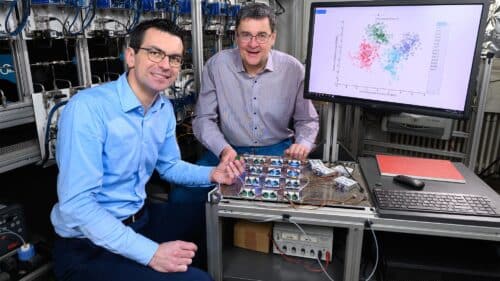
The project focuses on volatile organic compounds (VOCs) released by the human body through breathing and the skin, which can provide information about a person’s condition. Because these compounds are present in very small amounts compared with other particles in the air, the researchers at Saarland University are developing gas sensor systems that can identify specific compounds and measure their concentration. AI and machine learning will analyse the sensor data, while new sensor layers based on metal oxide semiconductor gas sensors will support continuous measurements. The technology could eventually be integrated into everyday products, such as smart textiles and bed sheets, to monitor health indicators without requiring direct interaction from the user.
Technology also targets hearing loss
The project also covers hearing-related devices, including cochlear implants with improved microphones and electronic systems that can reduce background noise, helping people with hearing loss understand conversations more easily. The technology is being designed for different users, including older people, people with care needs, people with chronic illnesses, and those looking to maintain a healthier lifestyle.