

Researchers have developed a neuromorphic chip that mimics brain learning, reducing memory loss while enabling continuous, low-power AI operation for edge devices worldwide.
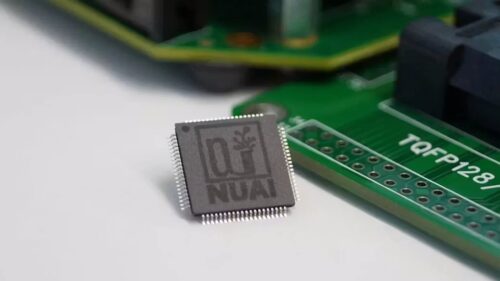
Researchers at The University of Texas at San Antonio (UTSA), working through the MATRIX AI Consortium and the Neuromorphic Artificial Intelligence Lab, have developed Genesis, a neuromorphic chip designed to tackle one of artificial intelligence’s (AI’s) biggest challenges: catastrophic forgetting. The chip enables AI systems to learn continuously without overwriting previously acquired knowledge while operating with significantly lower power consumption.
Unlike conventional AI accelerators, which often require cloud-based retraining when learning new tasks, Genesis is built around spiking neural networks that communicate using short electrical pulses. The architecture is inspired by the human brain and incorporates a mechanism known as metaplasticity, allowing frequently used neural connections to become more stable while keeping less important ones flexible enough to absorb new information.
Each processing element records not only its current activity but also its usage history and contribution. This enables the chip to preserve critical knowledge while directing new learning towards adaptable processing elements, reducing the risk of previously learned information being lost.
The researchers estimate that Genesis could consume between 30 and 100 times less energy than traditional AI hardware once fully realised. Its low-power operation makes it particularly suitable for edge computing applications where continuous cloud connectivity is unavailable or impractical. Potential uses include autonomous drones, wearable health monitors, implantable medical devices and remote environmental sensors that must operate for extended periods on limited power supplies.
The Genesis chips are being fabricated through a partnership with SUNY Albany using IBM’s 65 nm semiconductor technology, while the project is supported by a five-year grant from the Air Force Research Laboratory. Although the technology remains at the research stage, the team believes it demonstrates a promising direction for neuromorphic computing, potentially enabling future AI systems to learn continuously throughout their operational lifetime without sacrificing existing knowledge.