




A layered crystal that combines high electrical conductivity with low thermal conductivity, offering an efficient solid-state route to convert waste heat into usable electricity.
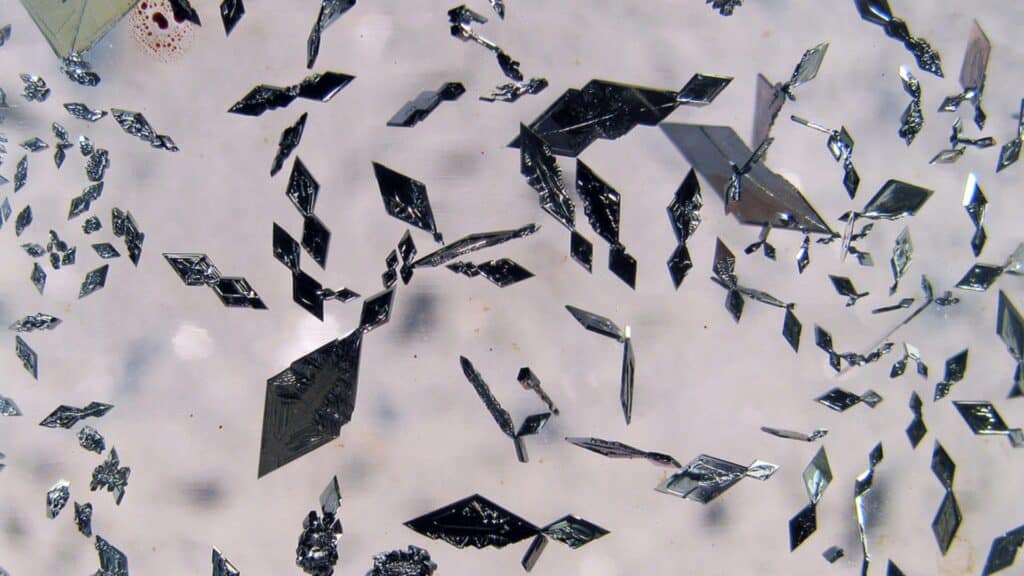
Developing thermoelectric materials that efficiently convert waste heat into electricity has long been limited by a fundamental trade-off: materials that conduct electricity well also tend to conduct heat, reducing energy conversion efficiency. Researchers at the Institute of Science, Tokyo, have now addressed this challenge with a newly designed layered crystal that integrates atomically thin iron selenide (FeSe) layers within a bulk crystal, significantly improving thermoelectric performance.
The newly developed material, TlFe₁.₆Se₂, achieves this by combining two normally conflicting properties. The embedded FeSe layers enhance charge-carrier mobility, boosting the material’s electrical power factor. At the same time, an ordered arrangement of iron vacancies disrupts the flow of phonons—the primary carriers of heat in solids—dramatically lowering thermal conductivity. Maintaining a large temperature gradient while allowing efficient electron transport is essential for improving thermoelectric energy conversion.
Unlike conventional thermoelectric materials that often rely on complex nanostructuring or intricate fabrication processes, the crystal intrinsically delivers both high electrical transport and low heat conduction through its engineered atomic structure. This simplifies material design while offering a practical route toward scalable solid-state energy harvesting devices. The approach demonstrates how precise crystal engineering can overcome the long-standing compromise between electrical and thermal transport properties.
Thermoelectric generators based on such materials operate without moving parts, fluids or mechanical systems. Instead, they directly convert temperature differences into electrical power through the Seebeck effect, making them highly reliable for continuous operation in harsh environments. Their solid-state nature also reduces maintenance requirements and enables compact system integration.
The technology could enable more efficient recovery of waste heat from industrial plants, automotive exhaust systems, manufacturing equipment, and power generation facilities, where large amounts of thermal energy are currently lost. It may also support self-powered sensors, edge electronics, and distributed internet-of-things (IoT) devices by harvesting ambient heat that would otherwise remain unused. As industries seek higher energy efficiency and lower carbon emissions, advanced thermoelectric crystals such as TlFe₁.₆Se₂ could provide an important building block for next-generation energy-harvesting electronics and sustainable power systems.
