

Vacuula replaces discontinued cloud services with a self-hosted server, restoring maps, schedules and cleaning zones on supported Neato robot vacuums.
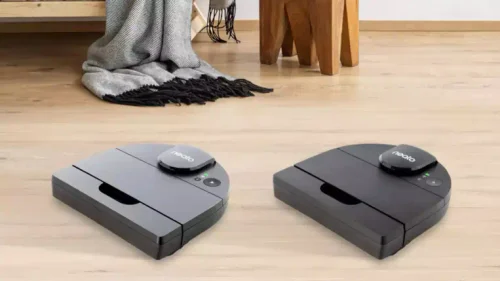
When Vorwerk shut down Neato’s cloud services in October 2025, owners lost access to app-based controls, cleaning schedules and other connected features. An open-source project called Vacuula offers an alternative by allowing users to run a replacement server on their own hardware and regain several of those functions.
Neato Robotics was acquired by Vorwerk in 2017 and ceased operations in 2023. At the time, Vorwerk said it would maintain the robot vacuum brand’s cloud infrastructure for at least five years. However, on 6 October 2025, the company announced that it was phasing out the service, citing changes in cybersecurity standards, compliance requirements and the limitations of the existing infrastructure. Without the cloud connection, affected robots can still start a full-house cleaning cycle manually, but several connected features are no longer available.
Vacuula addresses this problem by replacing the original cloud server with software that runs on a user’s own network. The project is published on GitHub under the GNU Affero General Public License version 3.0 (AGPL-3.0), allowing developers to inspect, modify and redistribute the code under the licence’s conditions. Its repository contains the server, web application, configuration files and deployment instructions, while a separate repository provides an installer for configuring compatible robots.
The server supports Neato Gen3 models D3, D4, D5, D6 and D7, along with Gen4 models D800, D8, D9 and D10. The original BotVac Connected, categorised as Gen2, is not yet supported. Available features include maps, cleaning history, schedules, settings, cleaning zones and no-go lines. Multi-zone cleaning is currently supported on Gen4 models, while support for Gen3 remains in development. Notifications, Home Assistant entity integration and custom sounds are also listed as unfinished features.
To run Vacuula, users need an always-on computer with a supported 64-bit ARM or x86 processor. The developers recommend Docker Compose for a standard installation, while Home Assistant users can install the project through its dedicated add-on repository. An LXC or standalone deployment option is also available. The server must remain running for the robot to communicate with it, so a compatible single-board computer, mini PC or repurposed computer could serve as the host. The project confirms its supported processor architectures but does not specifically certify every Raspberry Pi model.
For a Docker Compose installation, users download the project’s docker-compose.yaml file and run docker compose up -d to start the service. The software provides configuration options for network discovery, timezone, host IP address and the ports used by different robot generations. By default, Gen3 robots connect through port 335, Gen4 robots use port 3443, and the web application runs on port 80. The interface can be placed behind a reverse proxy to enable HTTPS, although the robot-facing ports cannot be proxied in the same way.
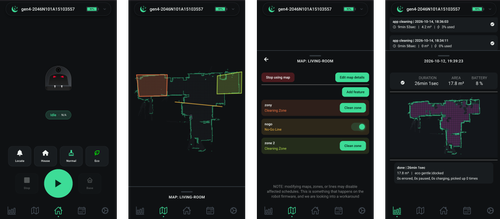
Once the server is running, users configure the robot with the separate Vacuula Installer, available for Windows, Linux and macOS with model-specific limitations. The installer redirects the compatible robot towards the locally hosted server instead of the discontinued Neato cloud. The project documents support for both Gen3 and Gen4 robots on Windows and Linux, while macOS support varies by processor and robot generation. Users should check the compatibility table before attempting installation. The developers also warn that configuring a robot carries risks and is undertaken at the owner’s own responsibility.
The project does not currently offer a shared community-hosted server, so each owner must operate their own instance. This gives users greater control over their device’s data and continued operation, but it also introduces responsibilities such as keeping the host computer powered, maintaining the software and troubleshooting network connectivity. The installer repository is also open to contributions, including translations and development improvements.
For Indian makers and electronics students, Vacuula provides a practical example of how self-hosted software can extend the life of connected hardware. A small computer running Linux and Docker can replace a discontinued cloud service, while the public repositories offer opportunities to study network communication, server deployment and device configuration. The same underlying issue is relevant to smart appliances used in India: when essential functions depend on a manufacturer’s remote infrastructure, a shutdown can limit a product’s usefulness even when its hardware remains operational.
Vacuula cannot restore every Neato model or guarantee that every original feature will return. However, by making its server and installer available under an open-source licence, the project offers owners and developers a way to maintain supported robots independently of the original cloud service.
For more information, click here.