

A flexible electronic skin developed by researchers improves pressure and temperature sensing, potentially giving personalised prosthetics finer feedback and more natural touch in everyday use.
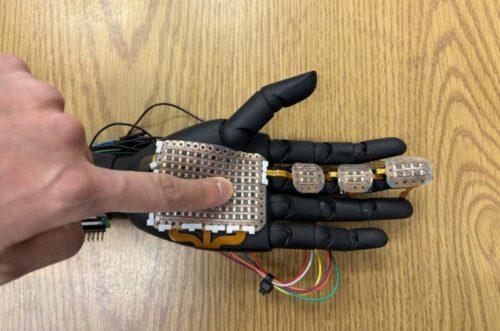
Washington State University researchers have developed a customised electronic skin sensing system for prosthetics that can detect pressure and temperature with greater sensitivity. The supplied source does not identify a commercial company or a branded product; it describes the research system developed by the university team.
The technology could help amputees gain more useful sensory feedback from prosthetic limbs. According to the source, the electronic skin can sense at a scale 10 times finer than current commercial glove sensors, potentially allowing users to detect changes in pressure and temperature more accurately.
The researchers designed the sensor system to address limitations in existing electronic skins, which can be expensive, provide relatively low sensing resolution and may not conform well to different limb shapes. These limitations can make it difficult to achieve consistent coverage and reliable sensing across a prosthetic surface.
The new approach uses thin-layer electronics that incorporate temperature and pressure sensors. The researchers also developed a customised sensing system designed to conform to the three-dimensional shape of limbs. A “scan model print” manufacturing method was used to support personalised three-dimensional fabrication and high-density sensing.
The system is intended to provide seamless coverage over the forearm region of prosthetics while maintaining reliable sensing. The source also highlights its potential for identifying surface texture and material properties through pressure sensing.
The work could contribute to the development of more capable bionic limbs, particularly systems that combine sensing with haptic stimulation. By providing more detailed information about contact, pressure and temperature, electronic skin could eventually help prosthetic users interact with objects and perform everyday tasks with greater awareness.
The research was carried out by Washington State University researchers and published in Cell Reports Physical Science.