

An ESP32-S3 and LR2021 radio enable low-cost ADS-B aircraft tracking.
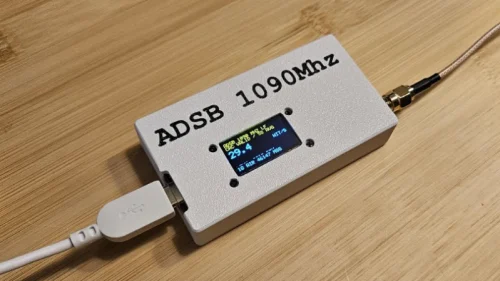
Automatic Dependent Surveillance-Broadcast (ADS-B) radio tracking is an important technology for pilots, UAV operators, and individuals who monitor airspace around them. The traditional method of receiving 1090 MHz Mode S position signals or 978 MHz Universal Access Transceiver flight data was through avionics receivers or a combination of a single-board computer and a software-defined radio dongle.An open-source hardware build shows that high-performance aircraft tracking can be accomplished directly on low-cost microcontrollers. This system employs a combination of ESP32-S3 microcontroller together with an LR2021 LoRa radio, which has been modified to receive ADS-B signals with minimal component expense.

Conventional DIY setups include a single-board computer that runs Linux OS together with USB SDR tuners. While working, such a device requires much electricity and thermal management. Moreover the initialisation time takes tens of seconds
The custom embedded design moves signal reception and protocol decoding down to bare-metal microcontroller silicon. By pairing a sub-GHz RF transceiver chip with an efficient microcontroller processing core, the system isolates high-speed RF sampling and frame parsing into hardware-level routines. This structural shift removes the need for bulky software dependencies, high-frequency host processors, or heavy digital signal processing libraries.
This results in reduced complexity of the system that is advantageous in terms of power consumption and small size of the device. Being free from an operating system, the receiver starts immediately and consumes significantly less electricity than the Linux-based desktop processors. Due to its small heat dissipation, the circuit can be placed in totally sealed boxes, which makes it applicable in portable flight kits, remote solar-powered repeaters, and even in high-altitude weather balloons.

The data is sent out using simple serial communication protocols such as UART or SPI. This means that the flight data can be fed directly into microcontrollers, ground control stations, or telemetry recorders through hardwiring without having to worry about any problems with compatibility or latency from virtual or USB communications ports.
With increasing expansion of India’s Unmanned Aircraft Traffic Management systems along with its localized airspace monitoring network, the cost-effective embedded telemetry system plays an integral role in the development process for the locals. Integrating the ADS-B receivers directly on the locally developed microcontroller allows Indian drone makers to install detect-and-avoid features into their stations and drones.
This design shows how customized radio reception can be taken off computer platforms to dedicated single-chip embedded systems. As sub-GHz silicon becomes more integrated, microcontroller-based RF parsing will make specialized aviation awareness tools accessible to a much broader community of makers and design engineers.
For more information, click here.