What happens when humanoid robots compete in human sports? Chinese robots have surpassed records in sprinting and high jump at Beijing games.
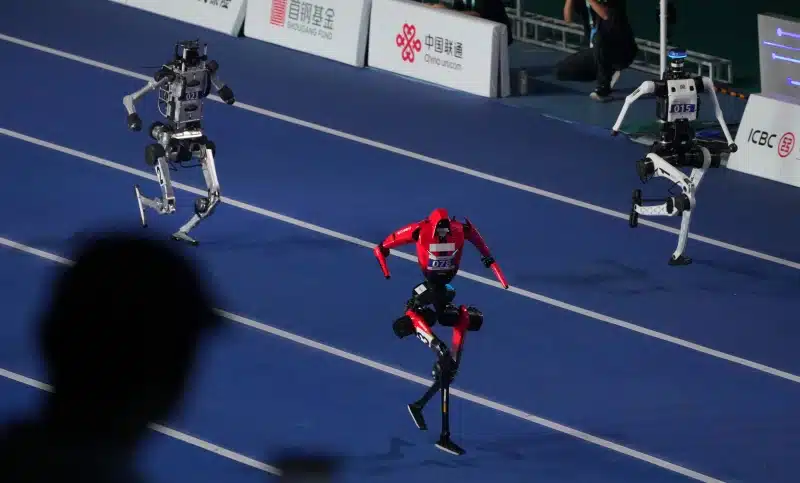
Tiangong Ultra, a humanoid robot developed by Beijing-based X-Humanoid, completed the 100-metre sprint in 9.39 seconds, beating Usain Bolt’s human world record of 9.58 seconds set in 2009. The robot achieved the result at the World Humanoid Robot Games in Beijing.
The same developer also produced a humanoid robot that reached 2.88 metres in the standing high jump, surpassing the human record of 2.45 metres set by Cuban athlete Javier Sotomayor in 1993. The result is a substantial improvement over the 0.95-metre humanoid record achieved at the first edition of the games last year.
These performances highlight advances in humanoid locomotion, particularly the control of multiple actuators while maintaining balance during high-speed running and dynamic jumping. Such movements require coordinated control of the robot’s joints, stability systems and force generation.
Another robot called Lightning, developed by Chinese smartphone company Honor, completed the 100-metre sprint in 9.32 seconds during a trial before the games, reaching a peak speed of 14.5 metres per second.
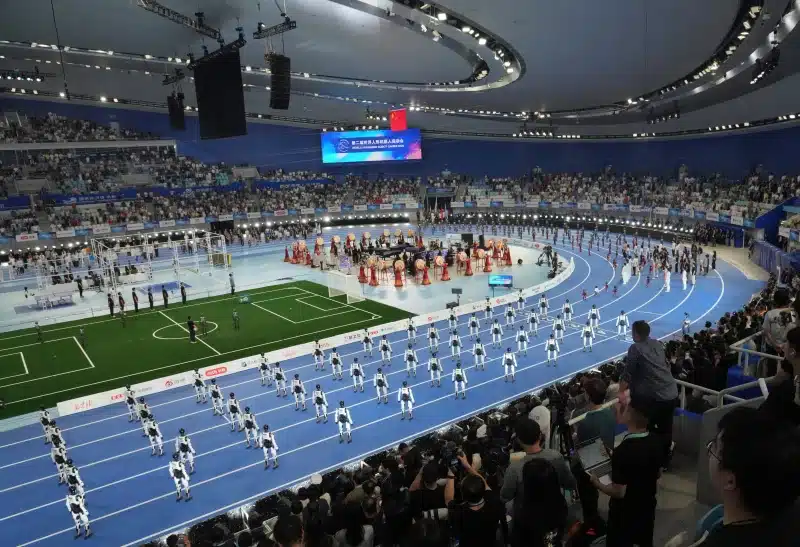
The five-day World Humanoid Robot Games features 51 events and more than 1,000 competitions, including running, football, table tennis, weightlifting and tug of war. More than 2,000 humanoid robots are participating, according to organisers.
Despite these performances, humanoid robots remain largely focused on demonstrations, performances and research. Translating advances in controlled sporting environments into reliable operation across factories, homes and other real-world settings remains a key engineering challenge.