




A US robotics company is pitching humanoid machines for difficult border terrain, promising autonomous sensing and surveillance while keeping human officers responsible for final decisions.
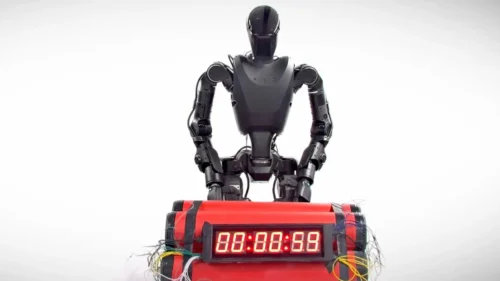
US robotics company Foundation is pitching its Phantom humanoid robot as a potential tool for monitoring difficult terrain along the US southern border. The company says the machine could help federal agents patrol areas that are challenging for people, vehicles, drones and fixed cameras to reach.
Foundation CEO Sankaet Pathak said the company has demonstrated its technology to department of homeland security (DHS) officials and is discussing the technology with several US national security agencies. However, DHS reportedly has no agreements, pilot programmes or active prime contracts with the company, meaning the proposed border role remains a potential application rather than an operational deployment.
Phantom is designed to navigate uneven ground, distinguish people from obstacles and map its surroundings. The company says these capabilities could allow the robot to identify potential border crossings before alerting human officers.
Foundation has also demonstrated improvements in robotic dexterity, including a tendon-driven hand capable of catching a baseball. The company presents these developments as evidence of progress in precision, speed and object handling.
The robot stands about 5 feet 11 inches (1.8 metres) tall and weighs roughly 170 pounds (77 kilograms). It has 29 degrees of freedom, a stated top speed of 6.7 metres per second and a payload capacity of about 88 pounds (40 kilograms).
Phantom uses Foundation’s proprietary actuators for torque and precision, while its Cortex AI system is designed to help robots interpret their surroundings and translate instructions into physical actions. The system uses sensory information and prediction techniques to support tasks including object handling and navigation.
Foundation says the robot could operate in rugged environments that are difficult for conventional surveillance systems to cover. However, the company has stressed that the machines would not independently make enforcement decisions. Human officers would remain responsible for determining the appropriate response to information supplied by the robots.
