

Multimodal ear sensors could provide continuous energy-expenditure estimates during outdoor activity, offering a compact alternative to conventional wearables and chest straps for future monitoring applications.
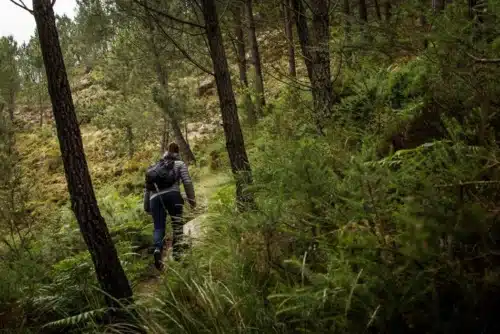
The study, published in Scientific Reports, evaluated Cosinuss One and Cosinuss Two multimodal in-ear sensors to assess whether they could estimate energy expenditure during outdoor activity. The devices combine optical heart-rate sensing with three-axis accelerometers, providing a discreet platform for continuous physiological monitoring.
Researchers assessed 24 healthy adults through laboratory and outdoor trials. During the laboratory phase, participants completed a modified Bruce treadmill protocol at progressively increasing speeds and inclines. Reference measurements came from a portable calorimeter and an electrocardiogram-validated chest strap.
The sensors showed strong predictive performance, with core variables explaining nearly 80 per cent of the variation in energy expenditure. Individual baseline metabolic differences also improved model accuracy, while outdoor testing found no statistically significant systematic bias compared with reference measurements.
During comfortable uphill walking, the mean absolute percentage error ranged from 22 to 26 per cent for both sensors. This was comparable with commercial wrist-worn devices and better than the performance reported for the Fitbit Sense in the study.
However, accuracy declined during downhill walking, with errors increasing to 37 to 38 per cent. The researchers suggest this may reflect calibration models trained primarily on uphill data, which did not fully capture changes in posture, muscle activity and lower energy expenditure during downhill movement.
The findings point to potential applications in health monitoring, clinical rehabilitation, sports training and occupational safety. An ear-canal platform could continuously measure heart rate, heart-rate variability, body movement and potentially other physiological indicators without requiring a chest strap.
The researchers say future work should expand model training to cover downhill locomotion, varied terrain and controlled walking speeds. Validation across different ages, body compositions and clinical conditions will also be needed before the technology can support robust individual-level monitoring and wider clinical adoption.