




How can India extend the usefulness of its regional navigation system? A satellite carrying an additional signal and an indigenous atomic clock is set to strengthen its services.
The Indian Space Research Organisation (ISRO) is preparing to launch NVS-03, a navigation satellite intended to maintain continuity of services provided by India’s Navigation with Indian Constellation (NavIC), formerly known as the Indian Regional Navigation Satellite System (IRNSS). The mission is expected to extend the system’s capabilities by adding the L1 signal to its existing L5 and S-band signals, while carrying an indigenous atomic clock.
The additional signal is significant for civilian navigation applications. L1 is widely used by global navigation satellite systems and its inclusion is intended to improve compatibility with civilian receivers, including those used in smartphones and wearable devices. Alongside L5 and S, it will give NavIC another signal option for positioning, navigation and timing services. The system’s service area covers India and extends up to 1,500km beyond its boundary.
Accurate timing is essential to satellite navigation. The system relies on precise time measurements to calculate a receiver’s position, making atomic clocks critical to its operation. NVS-03 will carry an indigenous atomic clock alongside procured atomic clocks, adding an Indian-developed timing component to the satellite’s payload.
NVS-03 is the third satellite in ISRO’s next-generation navigation series, which is intended to ensure continuity of NavIC services. The system offers Standard Positioning Service for civilian users and Restricted Service for authorised users.
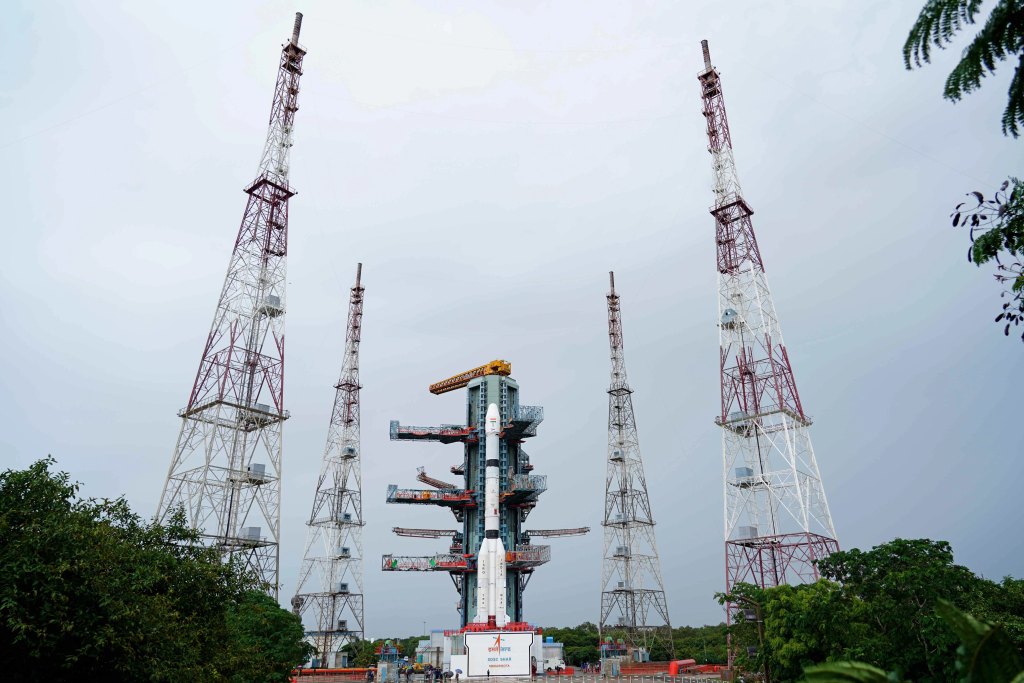
Dr V Narayanan, Chairman of ISRO, confirmed to reporters during his visit to Tirumala on October 29 that NVS-03 will be launched using the GSLV-F18 rocket at 11.51pm IST on October 30. This will be the 20th flight of India’s Geosynchronous Satellite Launch Vehicle.
The 50 metre tall, three stage rocket weighs 420 tonnes at lift off and will launch the approximately 2,232kg satellite into Geosynchronous Transfer Orbit (GTO). The launch will take place at the Second Launch Pad at Satish Dhawan Space Centre, Sriharikota.


