
A manganese-magnesium-iron cathode pushes sodium-ion pouch cells to 206 Wh/kg by making the oxygen reaction inside the material highly reversible.
Sodium-ion batteries have long offered a cost and materials advantage because sodium is abundant, their cathodes can avoid cobalt and nickel, and aluminium can replace copper as the current collector. Their main limitation has been lower energy density compared with lithium-ion cells. Researchers from Nanjing University, Zhejiang University, Soochow University and Lawrence Berkeley National Laboratory have now developed a manganese-magnesium-iron layered oxide cathode that delivers 206 Wh/kg in a sodium-ion pouch cell, addressing one of the technology’s key performance gaps.
The cathode has the composition Na2/3Mn7/12Mg1/4Fe1/6O2, abbreviated by the authors as NMMF. Its key feature is the role of iron in controlling lattice-oxygen redox. In layered cathodes, some charge can be stored by oxygen atoms in the crystal lattice rather than only by transition metals, increasing the material’s capacity. However, this oxygen redox can also accelerate degradation because oxidised oxygen may fail to recover its electrons and leave the lattice. In NMMF, iron acts as a redox mediator. During charging, Fe4⁺ accepts electrons from the lattice oxygen, while during discharge, Fe2⁺ transfers those electrons back to the oxidised oxygen. The researchers report that this mechanism increases the reversibility of the oxygen redox reaction from 75 to 99 per cent, helping the oxygen remain in the lattice and participate repeatedly in charge storage.
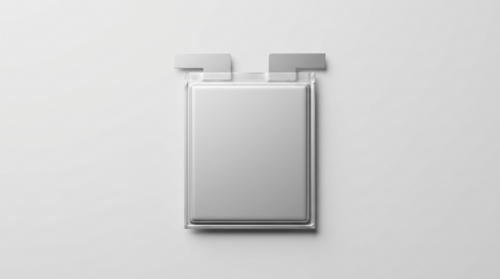
The reported pouch cell has a capacity of 15.8 Ah, operates over a 1.5 to 4.4 V voltage window and retains 87.8 per cent of its capacity after 100 cycles at a current density of 50 mA/g. The corresponding author is Shaohua Guo.
At 206 Wh/kg, the cell is above the current upper end of commercial sodium-ion cells, which the IEA says can reach around 175 Wh/kg. The comparison with lithium iron phosphate is closer, however, with the latest LFP cells reaching about 205 Wh/kg at cell level. The result therefore places this sodium-ion chemistry roughly alongside the highest-energy LFP cells while retaining sodium’s potential advantages in material availability and cost.
This is a laboratory pouch cell, not a commercial product. The most important limitation is the 100-cycle test. One hundred cycles can demonstrate that the cathode chemistry remains functional, but it is far short of the cycle life expected from a commercial battery. An electric scooter charged once a day would reach 100 cycles in roughly three months, while commercial LFP batteries are designed to operate for thousands of cycles. The reported 87.8 per cent capacity retention therefore describes performance only through the first 100 cycles and does not establish how the cell would behave at 500, 1000 or 2000 cycles. Manganese-rich layered oxide cathodes have also historically faced challenges including voltage fade and structural changes during extended cycling. The result should therefore be viewed as a cathode chemistry demonstration, not as a ready-to-commercialise sodium-ion battery.
India has a direct commercial stake in sodium chemistry. Reliance New Energy acquired UK sodium-ion developer Faradion in 2021, and Reliance has said its Jamnagar battery gigafactory will begin commissioning in 2026. The first phase is planned for 40GWh of annual battery manufacturing capacity, scalable to 100GWh, although Reliance’s current disclosures identify LFP as the initial battery chemistry while sodium-ion technology is being fast-tracked for commercialisation. The strategic logic is import substitution. India has limited domestic lithium resources and remains heavily dependent on imported cells, so sodium-ion could eventually reduce exposure to lithium and battery-material supply chains. Indian academic groups have also published research on sodium-ion battery materials. If sodium cathodes can maintain energy densities above 200 Wh/kg through a realistic cycle life, the chemistry could move beyond grid-storage applications and compete for cost-sensitive two- and three-wheeler markets in India.
For more information, click here.