





What happens when a humanoid robot breaks down on the job? A mobile workshop can bring engineers, equipment, and a replacement unit.
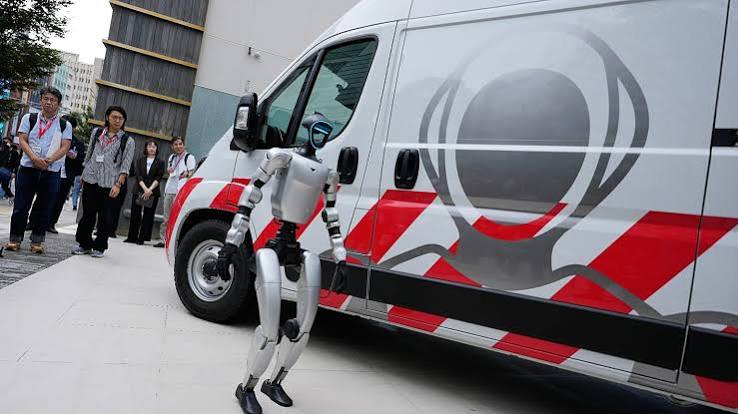
GMO Internet Group has unveiled a mobile maintenance vehicle designed to repair humanoid robots at the locations where they operate. Developed by GMO AIR, the vehicle carries engineers, repair equipment, replacement parts, and a spare humanoid robot, allowing a damaged unit to be serviced or replaced without immediately removing it from operation.
The system addresses a practical challenge that could become more significant as humanoid robots move from demonstrations into workplaces. Sending a damaged robot to a distant repair facility can interrupt operations and leave the deployment without a working unit. The mobile setup allows engineers to reach the robot instead, while a replacement humanoid can be deployed when an immediate repair is not possible.
The vehicle is equipped as a mobile repair workshop, with space for humanoid robots, laptops, tools, and maintenance equipment. Its ambulance-like exterior includes purple roof lights, but its primary function is transporting technical personnel and equipment rather than responding to medical emergencies. Once at the site, engineers can assess the damaged robot and attempt repairs. If the repair requires more extensive work, the damaged unit can be transported to a repair base while the replacement continues operating.
The company currently operates one vehicle from GMO’s Tokyo headquarters and could establish additional vehicles and maintenance bases if demand increases. The company said the concept came from its own experience with service disruptions after damaged humanoid robots had to be sent away for repairs. The development points to a supporting infrastructure that may become necessary alongside the growth of humanoid robotics, particularly in applications where robots are expected to work continuously.

