

A three-times-larger crystal could strengthen high-energy laser systems, supporting inertial fusion research and helping researchers pursue more powerful, efficient designs for future energy applications worldwide.
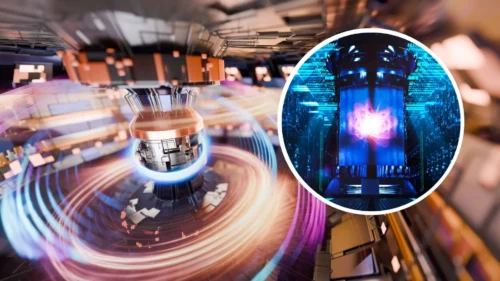
Northrop Grumman SYNOPTICS has developed a crystal three times larger than previous versions, with the technology intended to support high-energy laser systems for inertial fusion energy research. The company says the larger crystal could help enable powerful laser systems being developed for fusion research at Germany’s Deutsches Elektronen-Synchrotron (DESY).
The development addresses a key requirement in inertial confinement fusion, where high-energy laser systems need large, high-quality crystals to amplify light and produce powerful laser beams. The larger crystal is intended to support the development of systems capable of delivering the high energy required for future fusion experiments.
The work forms part of broader efforts to advance laser technology for inertial fusion energy. The Fusion Energy Laser Development and HED Analytics (IFuEL) consortium, which includes DESY and is funded by Germany’s Federal Ministry of Research, Technology and Space, is developing a new generation of laser technology for this field.
According to the source, the project is targeting one of the central challenges in fusion laser development: achieving high wall-plug efficiency while maintaining scalable and reliable high-energy laser performance.
The new crystal builds on more than a decade of cryogenic ytterbium-doped yttrium lithium fluoride (Yb:YLF) laser research at DESY. The technology is intended to contribute to a 200-joule-class laser module that could serve as a potential building block for future fusion laser drivers.
Laser crystals are central to solid-state laser systems because they enable the amplification of light needed to generate a laser beam. The larger crystals are designed to provide the aperture and optical quality needed for efficient operation at high average power.
The development could therefore open new possibilities for laser-system designs, bringing researchers closer to systems capable of supporting clean-energy research through inertial fusion. The technology may also help advance laser performance, reliability and scalability as fusion research continues.