




A pocket-sized USB accessory turns a smartphone into a keyboard, mouse, gamepad, or SSH terminal for PCs, servers, and Raspberry Pi boards.
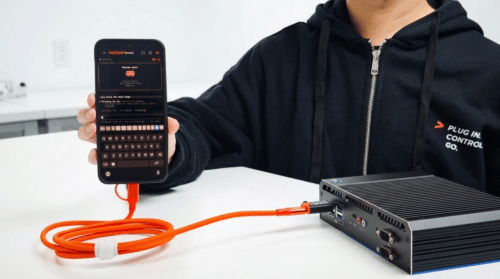
TechxArtisan, the Chinese hardware maker behind the Openterface Mini-KVM and KVM-GO, has launched the Openterface KeyMod, a pocket-sized USB accessory that lets an Android or iOS smartphone work as a keyboard, mouse, gamepad or terminal for controlling PCs, servers and single-board computers such as the Raspberry Pi. The device is now available through a Crowd Supply crowdfunding campaign, giving IT technicians and hobbyists a phone-based option for controlling systems without carrying a separate keyboard or dedicated KVM switch.
KeyMod is available in two versions. The KeyMod Mini connects to the target computer through a USB Type-C plug and communicates with the smartphone over Bluetooth 5.3. The KeyMod Plus adds a USB Type-A connector for the target machine and a wired USB Type-C connection to the phone for higher bandwidth. Both use WCH’s CH32V208 RISC-V microcontroller, running at up to 144 MHz, and appear to the connected computer as standard USB Human Interface Devices (HID), allowing keyboard and mouse control even in the BIOS before an operating system starts. The companion KeyCmd smartphone app sends keyboard, mouse and gamepad inputs to the KeyMod through Bluetooth or USB.
The KeyMod Mini measures 25 × 15 × 5 mm and weighs about 2.4 g, while the KeyMod Plus measures 44 × 20 × 10 mm and weighs about 8.9 g. The Mini’s Bluetooth 5.3 connection supports up to 2 Mbps with an optimal range of around 5 m, while the wired Plus reaches up to 10 Mbps. Both versions draw power directly from the target computer’s USB port, eliminating the need for an internal battery. The KeyMod also provides a USB CDC-ECM virtual network interface, allowing a connected smartphone to establish SSH, VNC or file-transfer sessions with the target computer through a network connection presented over USB.
A commercial IP-KVM switch offering similar out-of-band server access can cost several thousand rupees and may require its own network setup. KeyMod takes a simpler approach by using a device most engineers already carry: their smartphone. For server administrators and embedded developers who occasionally need keyboard access to a headless machine, Raspberry Pi, kiosk or system stuck at the BIOS screen, the small USB accessory can reduce the need to carry a dedicated emergency keyboard.
Both KeyMod variants are priced at $42 on Crowd Supply, with $8 shipping within the United States and $18 internationally, against a $15,000 funding goal. Indian buyers would need to pay any applicable customs duties and taxes on top of the listed price and shipping, but the final landed cost depends on the customs classification and import method, so a fixed INR figure cannot be confirmed from the available information. New orders are currently estimated to ship on February 14, 2027, making this a crowdfunding pledge rather than an immediately shipping product. Windows support through the RNDIS network protocol is still in development, while the KeyCmd app is in directed beta review and is planned to become open source after the campaign.
India’s IT services and electronics manufacturing sectors have large numbers of field technicians and system administrators who may need BIOS-level or out-of-band access to servers, kiosks and industrial computers, a task often handled with a spare keyboard or dedicated KVM hardware. KeyMod’s $42 price puts the device at roughly INR 3,600 before shipping, taxes and any applicable customs charges, based on the current exchange rate, rather than representing its final landed cost in India. Its planned open-source hardware and firmware could also give Indian makers the option to reproduce or adapt the design locally after those materials are released.
For more information, click here.


