What if materials used in LEDs and implants could be made into nanocrystals? University of Chicago researchers have developed a method to produce them.
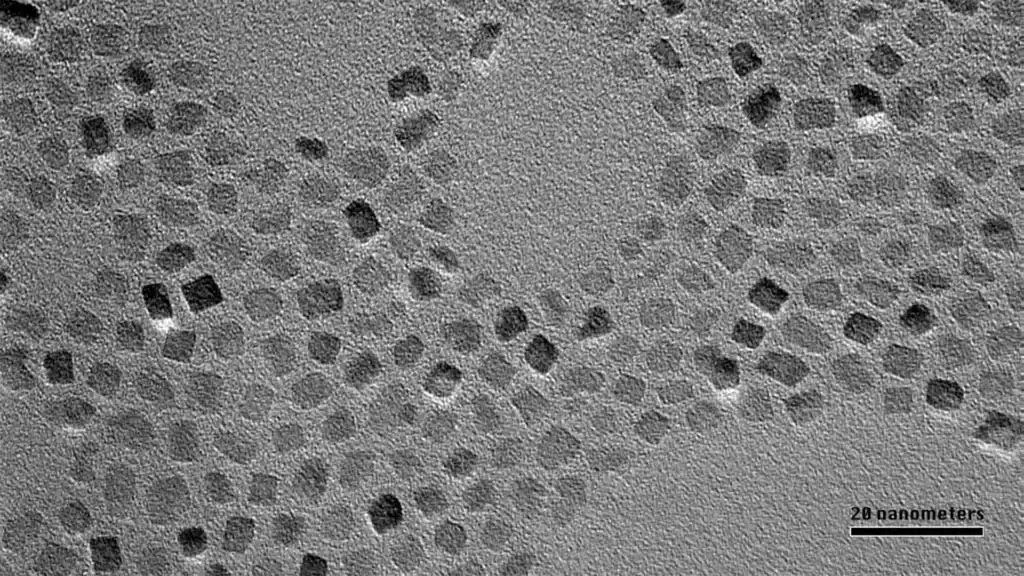
Researchers at the University of Chicago and Argonne National Laboratory have developed a method to create metal nitride nanocrystals, overcoming a long-standing challenge in producing these materials at nanoscale dimensions.
The researchers produced nearly a dozen metal nitride materials that were previously difficult or impossible to synthesise as nanocrystals using conventional methods. The approach could allow materials such as gallium nitride, titanium nitride, niobium nitride and molybdenum nitride to be incorporated into applications beyond conventional rigid structures.
Metal nitrides are already used in several technologies. Gallium nitride, for example, is widely used in LED lighting and displays, while titanium nitride is used in medical implants. Niobium nitride is used as a superconductor, and molybdenum nitride has applications as a catalyst.
The challenge comes from the strong bonds between metal and nitrogen atoms. During conventional crystal formation, atoms need to rearrange before settling into an ordered structure. Strong metal-nitrogen bonds restrict this rearrangement, making controlled nanocrystal formation difficult.
The team addressed this by using molten salts as the reaction medium and identifying a specific combination of temperature and ammonia pressure. Under these conditions, metal-nitrogen bonds could break and reform sufficiently for the crystal structures to organise at nanoscale dimensions.
The resulting nanocrystals could potentially be mixed into polymers, deposited using inkjet printing or incorporated into fabrics and flexible electronics. These applications remain potential uses rather than demonstrated outcomes of the study.
“This expands the boundaries of the field beyond what were previously fundamental constraints, and lays the foundation for the use of nitrides as nanomaterials,” says Dmitri Talapin, professor of Chemistry and Molecular Engineering at the University of Chicago and a scientist at Argonne National Laboratory.