




Brain-inspired chips can deliver efficient computing at the edge, but their unusual architecture creates new attack surfaces requiring stronger hardware security measures before wider deployment.
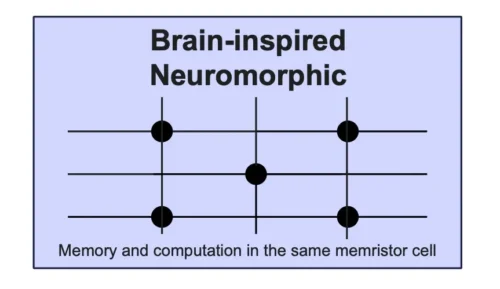
BrainChip’s Akida AKD1000 illustrates the potential of neuromorphic intelligence for embedded systems, while Chipus Quantum is cited as an example of work towards stronger security infrastructure. These brain-inspired architectures can improve processing efficiency by combining memory and computation, but their unconventional design also introduces security risks that conventional protections may not fully address.
Neuromorphic chips use event-driven spiking neural networks, in which neurons remain inactive until incoming signals accumulate beyond a threshold. A short electrical pulse, or spike, is then passed to another neuron. This approach can reduce unnecessary computation and energy consumption, making it attractive for resource-constrained embedded devices.
However, the same electrical activity can provide information for attackers. Side-channel techniques can monitor measurable effects such as power consumption, voltage fluctuations and electromagnetic interference. Repeated spike patterns may reveal computational behaviour, while changes in power use could potentially expose stored weights, model parameters or other sensitive information.
Fault-injection attacks present another concern. Attackers can deliberately introduce errors through methods such as voltage glitches, electromagnetic interference or laser-based injection. The article also highlights hardware Trojans, where malicious modifications are introduced during manufacturing or elsewhere in the supply chain. Such changes could alter network weights, corrupt processing or provide unauthorised access.
Security protections therefore need to operate at the hardware level as well as through software. Suggested approaches include physically unclonable functions, trusted execution environments and fault-tolerant memristor crossbars. Machine-learning techniques may also help identify abnormal behaviour through adversarial training, power-signature monitoring, post-activation and spike-train regularisation.
As neuromorphic computing develops, security will become increasingly important alongside efficiency. The article argues that stronger built-in protections, including post-quantum cryptographic capabilities, will be needed to prevent emerging attacks from undermining the benefits of these energy-efficient embedded systems.

