




A new fabrication platform uses direct atomic-layer processing to produce semiconductor materials, targeting faster development of advanced devices and US-based manufacturing capabilities for future electronics.
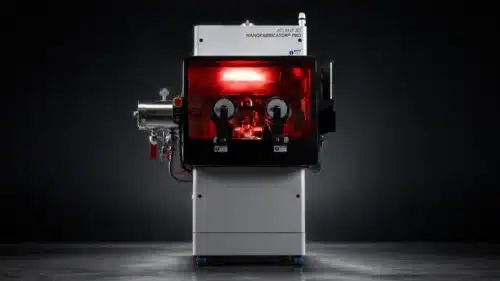
ATLANT 3D has introduced the NANOFABRICATOR PRO, a nanofabrication platform designed to produce semiconductor materials using Direct Atomic Layer Processing (DALP). The platform is presented as a tool for atomic-scale materials fabrication, with applications spanning semiconductor development and advanced manufacturing.
According to the material shown, the system is designed to address limitations associated with conventional semiconductor fabrication. Its approach allows researchers to work with materials and structures at very small scales while supporting experimentation with different material combinations and fabrication processes.
The platform is also described as being built for US-based manufacturing. The company says NANOFABRICATOR PRO is designed to support domestic semiconductor production, with manufacturing taking place in the United States. This could help researchers and manufacturers develop materials closer to where they are ultimately needed.
The technology is intended to support the development of semiconductor materials rather than simply conventional device manufacturing. The article highlights the importance of improving control over materials and processes as researchers work towards increasingly advanced electronic systems.
Another focus is automation. The platform is described as having capabilities that can support more streamlined fabrication workflows, potentially reducing the complexity involved in producing and testing new materials.
The article also presents a longer-term direction towards autonomous materials development. ATLANT 3D says its platform could eventually incorporate greater automation, integrated technology and additional processing capabilities.
The company proposes that a future AI-powered autonomous materials foundry could identify promising candidates and use experimental data to guide further research. Such a feedback loop could allow computational predictions to be compared with physical results from fabrication.

