




Researchers have developed a low-cost hybrid material that uses sunlight, air and water to produce hydrogen peroxide under mild conditions.
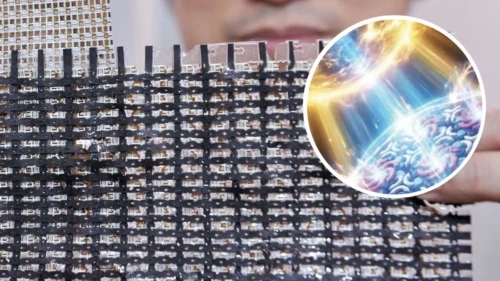
Argonne National Laboratory researchers have developed a hybrid nanosheet material that can produce hydrogen peroxide using sunlight, air and water, potentially offering a simpler route to the valuable chemical. The material combines a semiconductor with a biological light-absorbing component and operates under ambient conditions.
The system was developed using nanoarchitectonics, a technology that assembles nanoscale building blocks into functional structures. Researchers combined bismuth oxychloride (BiOCl), a synthetic semiconductor, with patches of purple membrane derived from naturally occurring microorganisms known as archaea.
According to the research described in the source, the resulting hybrid material produced more than five times as much hydrogen peroxide as the semiconductor alone. The approach also avoids the high energy input and more complex catalytic systems that can be required for conventional industrial reactions.
The nanosheets are approximately 200 nanometres thick, making them around 500 times thinner than a human hair. Their structure allows the biological and semiconductor components to work together during the chemical process.
When exposed to sunlight, the purple membrane captures light energy in a way similar to a biological solar panel. This helps drive the movement of protons and electrons at the interface with the BiOCl semiconductor.
The researchers found that this process enables oxygen from the air and water to be converted into hydrogen peroxide through a two-electron reaction. The design demonstrates how biological materials can be integrated with semiconductor technology to control chemical reactions under relatively mild conditions.
The work, reported in the Journal of the American Chemical Society, highlights the potential of nanoarchitectonics for developing functional materials from inexpensive and abundant components. It could also provide a foundation for exploring other chemical processes that use sunlight to drive useful reactions.

