




Low-cost 3D-printed reflective tiles developed at UC San Diego nearly double indoor link rates and coverage, offering a simpler alternative to active systems at scale.
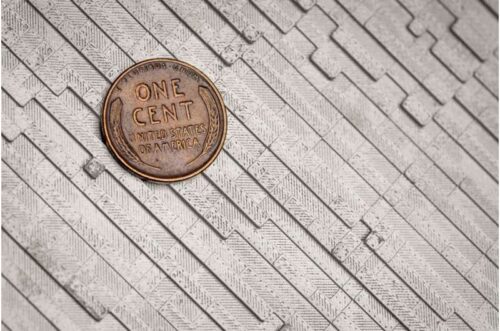
UC San Diego has developed FlowForm, a passive metasurface system using inexpensive 3D-printed reflective tiles to improve millimetre-wave wireless coverage indoors. Tests show the approach can nearly double average link rates and more than double coverage in challenging environments.
The work addresses a major limitation of millimetre-wave communications: signals struggle to pass through walls, furniture and other obstacles. This creates coverage problems despite the technology’s ability to carry very large amounts of data, particularly for emerging 6G networks.
FlowForm replaces costly active infrastructure with coordinated passive surfaces. The tiles are designed using maps of specific indoor environments and the positions of transmitting and receiving hardware, allowing signals to be redirected around obstructions and distributed more effectively.
Each six-inch-square tile contains thousands of sub-wavelength elements that passively control incoming wireless signals. Researchers developed two types: major-flow tiles that move larger data streams over longer distances and around obstacles, and minor-flow tiles that spread coverage across user areas.
The system uses a two-tier major–minor flow topology. Major flows form relay chains that provide a communication backbone, while minor flows branch from them to deliver broader coverage. The researchers say this structure is near-optimal for balancing coverage and robustness.
Importantly, the fixed tiles require no power, firmware changes, network-protocol modifications or runtime coordination. They can also support mobile users because standard access points continue scanning their steerable beams as people move.
Validated across five indoor environments using a millimetre-wave testbed, FlowForm delivered performance comparable with idealised active reconfigurable intelligent surfaces, but at substantially lower cost and complexity. The tiles cost roughly $2 each, while active mmWave RIS equipment can cost thousands of dollars.
The team has a provisional patent and is exploring licensing and future commercialisation opportunities.
