

The new evaluation platform enables developers to test neuromorphic AI models on standard computing systems before moving designs to embedded hardware.
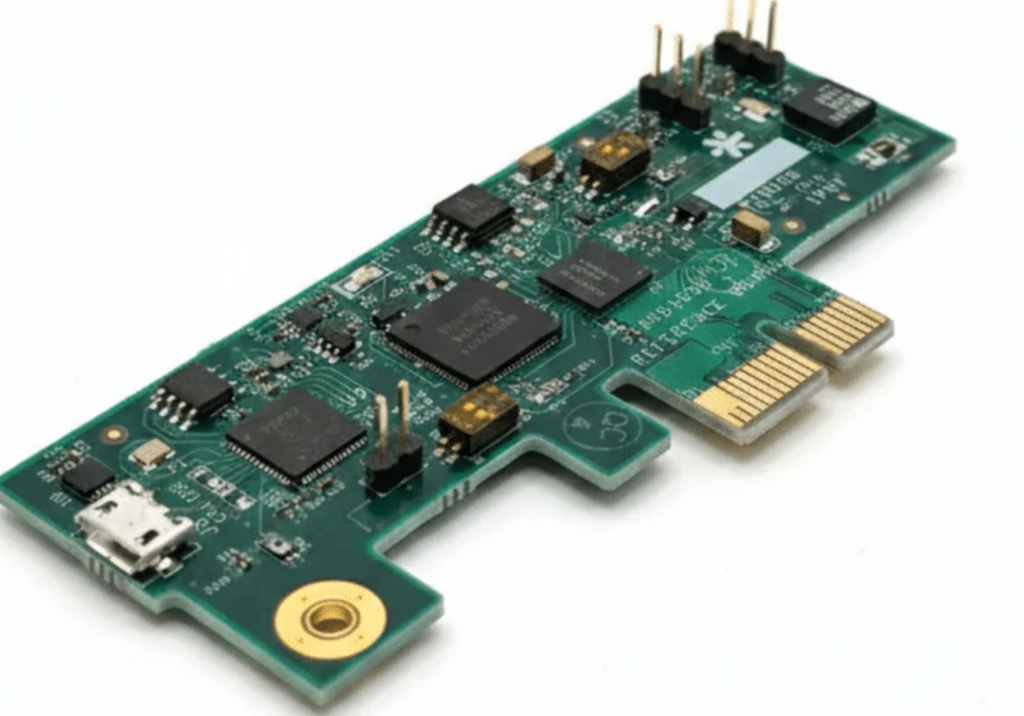
BrainChip has introduced the AKD1500 PCIe development card, giving developers a practical way to evaluate neuromorphic edge AI on standard desktop, workstation, industrial PC, and single-board computer platforms. The card is built around the company’s AKD1500 Edge AI Co-Processor and is designed to simplify the transition from AI model development to deployment on dedicated edge hardware.
The AKD1500 PCIe card plugs into an available PCIe slot, allowing engineering teams to run their own AI models and streaming data without requiring a dedicated embedded development platform. Models validated on the card can subsequently be deployed on compatible AKD1500-based hardware without requiring changes to the model.
A key advantage is its self-learning capability, which is aimed at edge applications where AI systems need to adapt to changing operating conditions after deployment. The underlying Akida architecture uses event-based neuromorphic processing to handle relevant sensor information locally, reducing the need to continuously transfer data to cloud infrastructure.
The key features are:
- Standard PCIe interface for host-system integration
- Event-based processing architecture
- Ultra-low-power AI acceleration
- Support for streaming sensor data
Evaluation path from development hardware to custom ASICs
For developers, the card provides an evaluation route spanning different stages of product development. The same AKD1500 technology is available through PCIe evaluation hardware, M.2 modules, packaged and unpackaged silicon, and licensable Akida IP for integration into custom ASIC designs.
This makes the platform relevant to applications such as industrial sensors, machine-vision systems, robotics, wearables, and other always-on edge devices where low power consumption, local processing, and adaptive intelligence are important. Its ability to operate within conventional PC-based development environments can also allow engineering teams to evaluate neuromorphic processing alongside existing AI development workflows.
The card is supplied with BrainChip’s open tools and model library, with no subscription or licensing fees for accessing the development environment. This enables developers to experiment with their own models and data before committing the technology to an embedded product design.
The launch extends the AKD1500 product family beyond embedded modules and silicon, providing a more accessible hardware platform for evaluating on-device, event-driven AI processing during early-stage development.
Click here for the original announcement.