How can spacecraft power increasingly capable processors without adding bulk? A compact GaN-based converter delivers high current while withstanding high radiation environments.
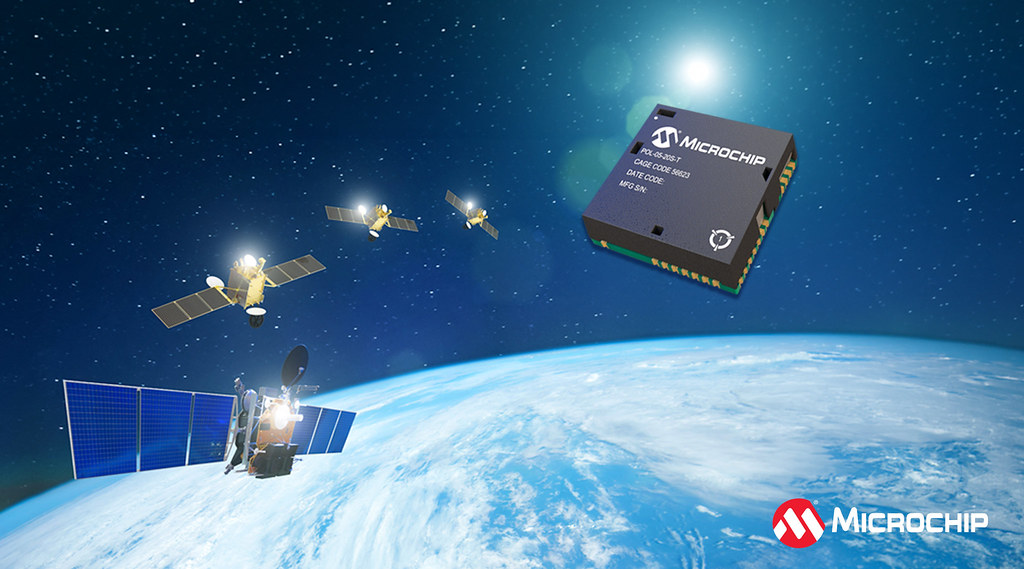
Microchip Technology has introduced a radiation-tolerant point-of-load (POL) converter that delivers up to 20A of continuous output current for power-intensive processing systems used in spacecraft. The POL-05-20S-T uses gallium nitride (GaN) power devices to combine high power density with fast transient response in a compact package.
As spacecraft incorporate more powerful FPGAs, microcontrollers and application-specific integrated circuits (ASICs), their power systems must handle rapid load changes while meeting strict size, weight and reliability requirements. The converter is designed to supply core voltage rails for these processing devices, helping engineers manage onboard power demands without increasing equipment volume significantly.
The device measures 38.4 × 38.4 × 11.4mm and weighs 25g. Its surface-mount package supports space-constrained designs, while a wide input voltage range of 4.75V to 13.2V and an adjustable output range of 0.7V to 5V allow it to serve different power rails.
The converter uses a synchronous buck topology with current-mode control to support stable operation and rapid responses to load transients. Output droop regulation helps manage voltage behaviour during sudden changes in current demand. Remote sensing, soft start, an enable pin, power-good indication, and undervoltage and overvoltage protection provide additional control and monitoring functions.
For operation in radiation-intensive environments, the POL-05-20S-T has electrical parameters specified before and after exposure to a total ionising dose of up to 50krad. It is also characterised for single-event effects at a linear energy transfer of up to 43MeV·cm²/mg. The device operates at full load across temperatures from −55°C to +100°C, supporting spacecraft exposed to wide thermal variations.
Ronan Dillon, senior director of Microchip’s high-reliability and RF business unit, says, “Space designers are integrating increasingly powerful digital processing, creating demand for compact power solutions that can respond quickly, while operating reliably in harsh environments.”
Click here for the official announcement.