Can satellite developers improve supply timelines without compromising timing reliability in orbit? An oscillator targets space missions with radiation-tolerant performance.
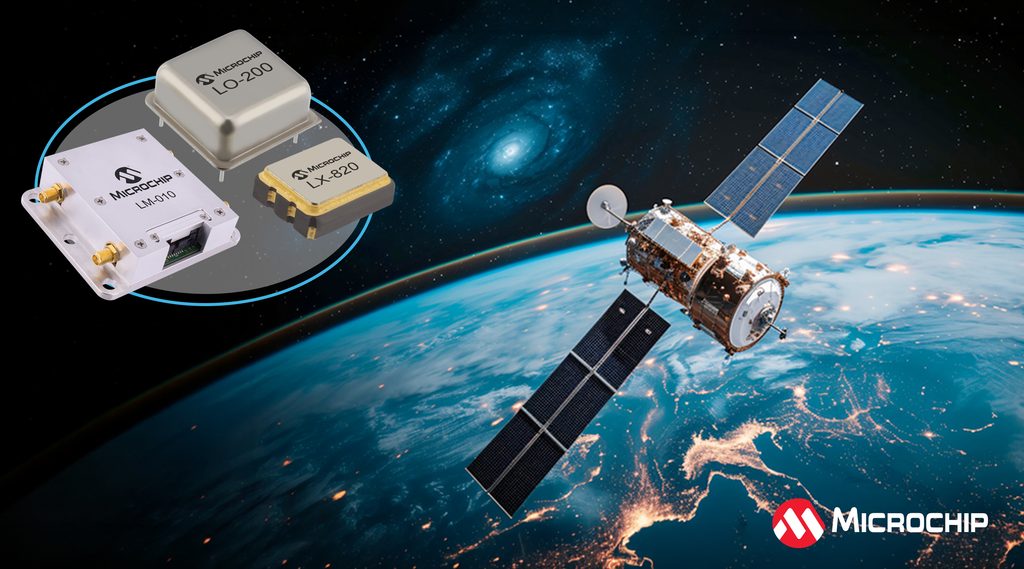
Microchip Technology has expanded its L-Series timing portfolio with the LX-820 radiation-tolerant quartz oscillator, designed for low Earth orbit (LEO) satellites and other space applications. The device provides a precision timing reference for satellite electronics used in communications, navigation, Earth observation and other missions, where stable clock signals help coordinate system operations.
The oscillator is part of a portfolio positioned between commercial off-the-shelf (COTS) components and traditional high-reliability space-grade solutions. This approach aims to ease two challenges for satellite developers: the cost of sourcing space-qualified components and lengthy procurement schedules. Microchip says many L-Series configurations are available from stock or with lead times of less than 20 weeks. The series can also reduce costs associated with the component pedigree, documentation and inspection requirements typically linked to traditional space-grade timing products.
Radiation testing is central to the L-Series offering. Its oscillators have undergone total ionising dose (TID) and single-event latch-up (SEL) testing as complete, functioning devices, with radiation tolerance of up to 50krad and SEL testing at 40MeV·cm²/mg. Most L-Series products also use swept quartz to reduce radiation-induced frequency drift.
The portfolio includes crystal oscillators (XOs), temperature-compensated crystal oscillators (TCXOs), oven-controlled crystal oscillators (OCXOs) and a pulse-per-second (PPS) disciplined oscillator, allowing developers to select components based on stability, phase noise, power, size and synchronisation needs.
The LX-820 measures 3.2 × 2.5mm and operates across temperatures from −55°C to +125°C. It meets MIL-PRF-55310 Level B requirements and provides ±100ppm performance. The device supports CMOS output frequencies from 1.25MHz to 135MHz and low-voltage differential signalling (LVDS) outputs from 100MHz to 250MHz, giving designers options for different timing and interface requirements.
Randy Brudzinski, corporate vice president of Microchip’s Frequency and Time Systems business unit, says “Satellite developers should not have to choose between dependable precision timing and the cost and schedule requirements of their mission. Our L-Series oscillators bring together the performance, radiation tolerance and supply availability our customers need to confidently deploy their New Space applications using a precision timing solution that helps reduce both schedule and mission risk.”
Click here for the official announcement.