Could RDNA 4 make advanced graphics more accessible? A lower-power desktop GPU brings ray tracing, AI acceleration, and AV1 support to 1080p gaming.
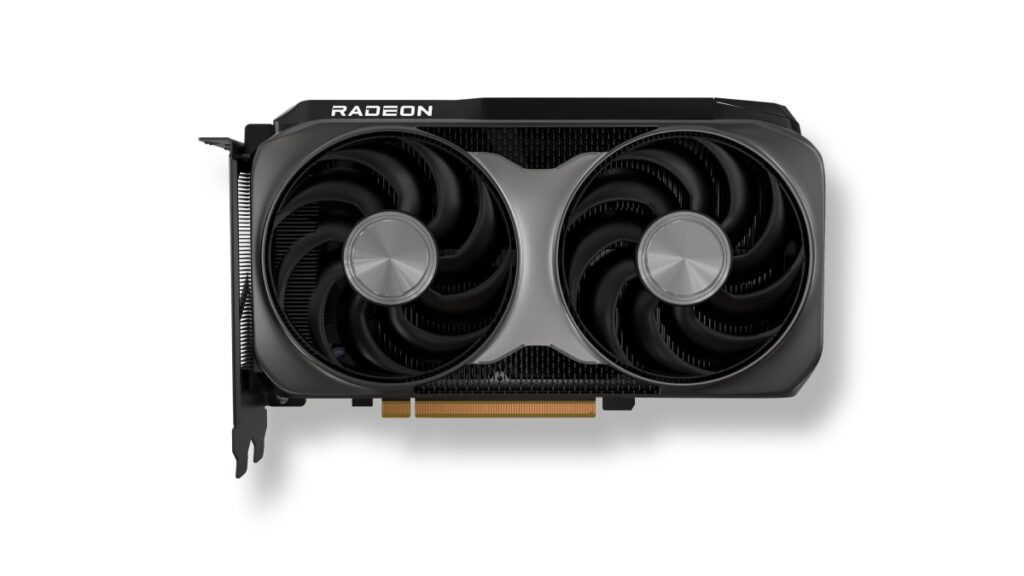
AMD has expanded its desktop graphics portfolio with the Radeon RX 9050, an entry-level graphics card based on the RDNA 4 architecture. Positioned below the existing Radeon RX 9000 Series models, the GPU combines hardware ray tracing, AI acceleration and AV1 media support with a 92W typical board power, targeting mainstream 1080p gaming systems.
The launch extends the availability of the company’s latest graphics architecture to a lower price segment while maintaining support for features found across the RDNA 4 family. Besides gaming, the inclusion of AV1 encoding and decoding makes the GPU relevant for livestreaming and content creation workloads, while its modest power requirement could simplify upgrades for existing desktop PCs.
Alongside the hardware announcement, the company released AMD Software: Adrenalin Edition 26.7.1. The driver adds support for the graphics card and includes early multiplayer access support.
The graphics card integrates 16 compute units, 1,024 stream processors, 16 ray accelerators and 32 AI accelerators. It is equipped with 8GB of GDDR6 memory on a 128-bit interface, delivering up to 288GB/s of memory bandwidth alongside 32MB of Infinity Cache. The GPU operates at a 1.92GHz game clock and can boost to 2.60GHz. Connectivity includes DisplayPort 2.1a and HDMI 2.1b, while supported technologies include FSR Redstone, Fluid Motion Frames, Radeon Anti-Lag 2, FreeSync, Smart Access Memory and Radeon Super Resolution.
Click here for the official announcement.