





A sensor uses microphones and cameras to detect air leaks and electrical faults, helping teams monitor equipment and plan maintenance.
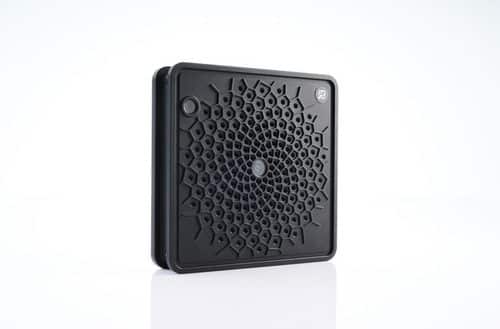
The SONASCREEN Sensor from SONOTEC detects compressed air leaks and electrical partial discharges through continuous acoustic monitoring. It uses 176 microphones, an optical camera, and a thermal imaging camera to identify sound sources and collect data on equipment condition. An application programming interface (API) allows the sensor to connect with existing monitoring and automation systems.
Unlike handheld acoustic cameras used during inspection rounds, the stationary sensor is designed to monitor critical plant areas continuously. It can be installed near equipment or integrated into mobile systems such as robots. Its edge computing capability allows it to take measurements independently, store data locally, and provide results for further processing.
The sensor operates across frequencies up to 100 kHz, covering audible sound and ultrasound. Its 176 digital microelectromechanical systems (MEMS) microphones have a sampling rate of 200 kHz. It can generate up to 100 acoustic images per second to locate sound sources in real time.
The optical and thermal imaging cameras provide additional information alongside acoustic measurements. This helps maintenance teams assess equipment and investigate anomalies detected during monitoring.
For compressed air systems, the sensor locates leaks and helps assess the associated losses. In electrical installations, it detects and locates partial discharges in the ultrasonic range. These discharges can indicate insulation problems and may require further investigation.
The sensor’s API allows users to integrate selected data streams into their own applications or existing systems. Available data includes acoustic images, video, thermal images, frequency spectra, and raw acoustic signals. Users can also configure measurement parameters and trigger functions to suit their monitoring requirements.
Local data processing and autonomous operation allow the sensor to work as part of an automated monitoring setup. Plant operators can use the collected information to identify developing problems and plan maintenance according to equipment condition rather than relying only on fixed inspection schedules.
Click here for the original announcement.
