




The software update adds AI tools and simulation features, helping engineers test more designs, find problems earlier, and reduce product development time.
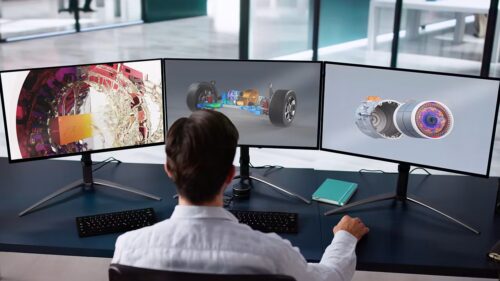
Siemens has released a new version of its Simcenter simulation software, adding artificial intelligence (AI) features, faster simulation tools, and closer integration across its engineering software portfolio. The update is also the first to combine simulation technologies from Siemens and Altair into a single portfolio, helping engineering teams work across different physics domains with more connected workflows.
The release is designed to help engineers evaluate more design options in less time, reduce simulation complexity, and identify design issues earlier in the development process. The software also improves collaboration between mechanical, thermal, electromagnetic, and system-level simulations.
A major addition is the wider integration of Simcenter PhysicsAI, Siemens’ geometric deep learning technology that converts simulation data into predictive AI models. Instead of running repeated simulation cycles, engineers can use these models to evaluate new designs much faster. According to Siemens, the technology can deliver results up to 1000 times faster than traditional solver-based simulations for suitable applications.
The release also introduces Simcenter PhysicsAI Generate, a physics-aware generative AI tool that creates new design concepts from existing engineering data. Engineers can generate alternative designs based on target dimensions, performance requirements, and historical simulation data within seconds, allowing faster design exploration.
The software update also brings simulation earlier into the product development process. Integration between Simcenter Simsolid and Designcenter allows engineers to perform structural simulations directly on computer aided design (CAD) geometry without creating a mesh, reducing simulation preparation time and enabling faster performance evaluation.
Siemens has also expanded its multiphysics simulation capabilities by improving connections between electromagnetic, thermal, fluid, and system-level simulations. Engineers can now export reduced motor models from Simcenter Flux into system and 3D simulation tools, while updates in Simcenter STAR-CCM+ improve analysis of applications such as electric motor cooling and battery thermal management.
The updates aim to provide a connected simulation environment that supports faster product development, earlier design validation, and collaboration across engineering teams. The unified Simcenter portfolio is part of the Siemens Xcelerator platform, bringing AI-assisted simulation and integrated engineering workflows into a single software ecosystem.
Click here for the original announcement.


