How much capability can fit inside a small satellite? An Indian space startup is integrating precision control and communication subsystems for orbital missions.
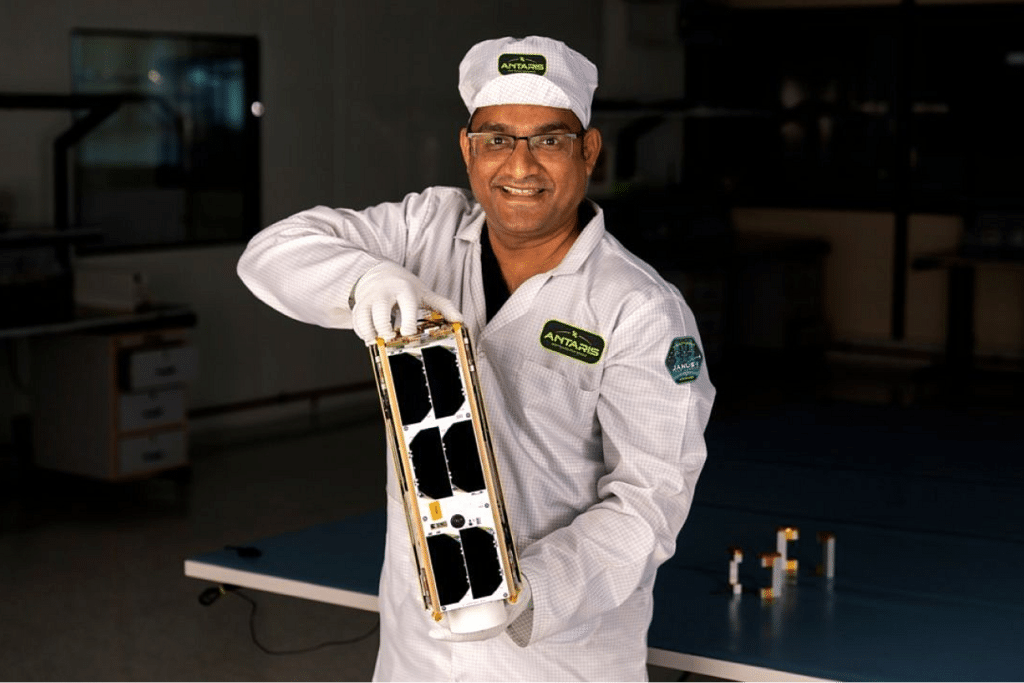
XDLINX Space Labs Labs has developed and integrated satellite subsystems for small spacecraft, with its Janus-1 platform demonstrating a high-precision attitude determination and control system (ADCS) capable of achieving 0.02-degree pointing accuracy. The platform also incorporates locally developed electrical power and communication systems.
The high-precision control capability allows a small satellite to maintain a specific orientation in orbit. This is important for Earth-observation missions, where the direction of the imaging payload directly affects the area being observed, as well as for positioning solar panels towards the Sun for power generation.
The ADCS determines the spacecraft’s orientation using a combination of sensors, including star and Sun sensors. It then enables the satellite to align itself to the required orientation, providing more precise control than is typically associated with small satellite platforms.
Janus-1 is a 6U CubeSat measuring approximately 10 × 20 × 30 cm and weighing around 10 kg. The satellite also incorporates an electrical power system and solar panels developed for the platform, along with separate communication links for spacecraft control and data transmission.
The communication architecture uses S-band for telemetry and telecommands, while X-band is used to transmit payload data from the satellite to the ground. The integration of these subsystems allows the spacecraft to perform functions beyond basic satellite operations.
The platform was designed to demonstrate technologies including IoT, machine learning and artificial intelligence operations, and laser-based communications. It underwent environmental testing according to ISRO standards before being launched from India.
The development demonstrates how small satellite platforms can integrate higher-precision control and multiple onboard technologies within a compact spacecraft. For Earth observation and other missions requiring accurate pointing, such capabilities can expand what small spacecraft can support.