




The process of mixing purified aluminum from soda cans with seawater produces hydrogen, with caffeine speeding up the reaction, making it suitable for marine vehicles.
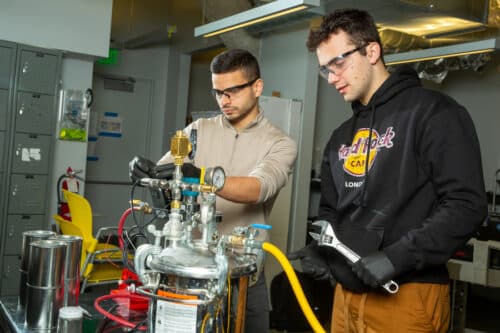
Credits:Photo: Tony Pulsone
MIT engineers have discovered that purified aluminum from soda cans can produce hydrogen when mixed with seawater. This method uses a rare-metal alloy treatment on aluminum and seawater’s salt ions for a sustainable reaction cycle. By adding a small concentration of imidazole from caffeine to the mix, they reduced hydrogen production time from two hours to five minutes. Building on this, they’re developing a compact reactor that uses aluminum pellets, gallium-indium, and caffeine with seawater to generate hydrogen on demand for powering marine and underwater vehicles.
Shields up
Researchers have identified aluminum as a potential solution due to its abundant availability and stability. When aluminum contacts water, it undergoes a simple chemical reaction that generates hydrogen and heat. However, this reaction faces a significant challenge: aluminum needs to be in a pure, exposed state to generate hydrogen. As soon as aluminum is exposed to oxygen, such as in air, it forms a thin oxide layer on its surface that acts as a barrier, preventing further reactions. This oxide layer is why hydrogen does not immediately form when a soda can is dropped in water.
By the sea
In their research, the team discovered that using an ion-rich solution allows them to retrieve and reuse gallium indium. These ions prevent the metal alloy from reacting with water and enable it to precipitate for reuse. They found that adding aluminum to filtered seawater produced hydrogen, but more slowly than in freshwater, because seawater ions form a barrier around the aluminum, slowing its reaction. To speed up the process, the researchers tested various unconventional ingredients.
The researchers think they can operate a sustainable hydrogen reactor and plan to first test it in marine and underwater vehicles. They estimate that a reactor with about 40 pounds of aluminum pellets could power a small underwater glider for 30 days by using surrounding seawater to generate hydrogen for a motor.

