




A new antenna aims to beat heating drift during cancer therapy by maintaining stable microwave power delivery.
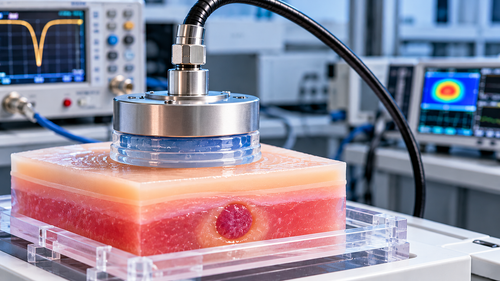
One way to assist cancer treatment can be done through heating up the tumor. This method is known as hyperthermia. The temperature of tumor tissue is raised to 40 to 44 degree Celsius within one hour to make cancer cells more vulnerable to radiotherapy and chemotherapy. The microwave applicator that is used in the process has been re-designed by engineers from IIT Madras for stable working during the treatment period.
A microwave antenna is then brought into contact with the patient’s skin along with a bag containing circulating deionised water between the applicator and the skin. The water called bolus, enables the skin temperature to be cooled so that the chance of burns is minimised. It also ensures that microwave energy can enter the body. But the water gets heated as the process continues, altering its electrical characteristics. As a result, it influences the antenna’s tuning. More energy is hence reflected rather than absorbed. The safety mechanism can automatically shut down the power at this point. Such a difficulty occurs in conventional equipment after eight to ten minutes, the report says.
For solving the problem, the team employed computer modeling of microwave propagation, fluid mechanics, heat dissipation and stress mechanics. As opposed to optimising each of these properties independently, scientists considered how they interacted during operation. The design created under this concept includes circular cavity, one folded aluminum antenna instead of fragile stems, double-channel water cooling system and cooling fins on the back side of the plate. These fins aid in dissipating heat via convective and radiative processes. The antenna structure described in the report works at 434 MHz.
The temperature variation in the water bolus reduced from 5.13 to 0.38 degree Celsius, remaining below the reported 1 degree Celsius. The power coupling was above 96 per cent for a period of 60 minutes. The heating reached a depth of 31mm with more than 75 per cent was deposited into the tissue whereas only about half of the energy was deposited in the muscle in the case of previous devices.
Simulations and experimental analysis of the design were done using tissue mimicking models. This prototype was evaluated using flat tissue phantom models, which had homogeneous properties as opposed to real human tissue. Therefore, further evaluation is required before this technology is brought into commercial use.
The commercially available hyperthermia equipment from outside might be unaffordable for many public hospitals. The device developed by the researchers using aluminium is said to have a potential of offering a cheaper solution to the problem.
The next step is to prove how the applicator works in more practical conditions. It is relatively easy to test the applicator on the flat tissue phantom, while the human body consists of many curved areas and different types of tissues. More testing should be done in order to understand if the applicator is able to give stable heating.
For more information, click here.


