




Need edge devices that work well and handle tasks quickly? These processors run tasks, protect data, and let you upgrade systems easily.
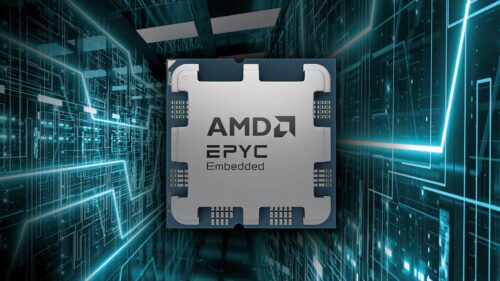
Network security appliances and entry-level industrial edge servers need processors that deliver real-time computing, low latency, energy efficiency, and long deployment lifecycles. Many systems struggle to balance performance, cost, and long-term stability. The EPYC Embedded 4005 Series from AMD addresses these challenges by providing reliable performance, advanced connectivity, and long-term support for embedded applications.
Based on AMD’s server technology and powered by the “Zen 5” x86 architecture, the processors integrate up to 16 cores and 32 threads in a compact 4 nm chiplet design. They are optimized for multi-threaded workloads, simplify software development, and help speed up product launch. High clock speeds and up to 128 MB of L3 cache allow fast data handling, while AVX-512 support with a 512-bit data path boosts AI inference efficiency. A configurable thermal design power (TDP) of 65–170 W lets customers balance power and performance for tasks like network packet processing and industrial control, including next-generation firewalls (NGFWs).
Long-term stability is critical for embedded systems. The EPYC Embedded 4005 Series offers seven years of planned manufacturing availability and built-in RAS (Reliability, Availability, Serviceability) features such as DRAM ECC, on-chip ECC/parity, and PCIe error detection to keep systems running reliably.
Integration is simplified through the AM5 socket, common across multiple EPYC generations. This consistency reduces design effort, maintains x86 software compatibility, and supports future upgrades, helping developers bring products to market faster and manage them more easily.
The processors also deliver the connectivity and bandwidth required for modern edge applications: DDR5 memory support at 5600 MT/s with 128-bit width and sideband ECC ensures high throughput; PCIe Gen 5 with 28 lanes and 11 root ports enables integration of high-speed networking, storage, and accelerators; and AMD Infinity Guard security features protect sensitive data and prevent downtime from attacks.
