




An edge AI chip combines AI processing and multi-camera support to build cameras for vehicles and robots with real-time sensing and low power consumption.
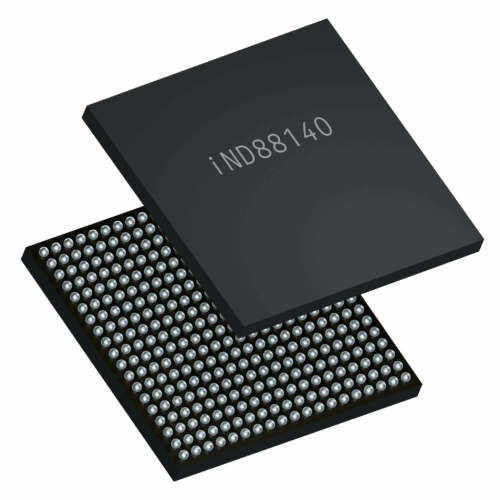
indie has introduced the iND881, its next-generation edge artificial intelligence (AI) system-on-chip (SoC). The device combines an AI compute engine with the company’s low-latency multi-camera image signal processor (ISP), providing a platform for developing smart cameras for automotive, robotics, and physical AI applications.
Designed for low power consumption and real-time operation, the iND881 integrates a neural processing unit (NPU), a digital signal processor (DSP), and a quad-core ARM Cortex-A53 CPU. The NPU accelerates AI inference workloads, while the DSP handles signal processing tasks, and the CPU supports both industry-standard operating systems and legacy software applications.
The SoC is intended for automotive applications such as driver monitoring systems (DMS), occupant monitoring systems (OMS), and smart electronic mirrors (eMirrors) with blind-spot detection. It also supports smart camera deployments in robotics, including autonomous mobile robots (AMRs) and humanoid robots, where multi-modal perception is required for sensing and navigation.
The SoC features a low-latency H.264 encoder for multi-channel video compression and streaming, along with a high-dynamic-range ISP capable of processing multiple camera inputs with sub-1 ms latency. It also supports additional sensing technologies, including infrared (IR), thermal imaging, time-of-flight (ToF), radar, and light detection and ranging (LiDAR), enabling perception in complex operating environments.
Built on the company’s iND880 platform, the device incorporates a hardware security module (HSM) to support cybersecurity requirements. It also uses a unified software development kit (SDK), allowing software reuse across platforms to simplify development and reduce time to market.
The iND881 can also be paired with emotion3D’s production-validated DMS/OMS perception stack to provide an integrated hardware and software solution. The platform is available either as a fully integrated package with the iND881 or as standalone perception software, allowing customers to choose the architecture that best fits their requirements. According to the company, the hardware co-design approach reduces third-party IP integration complexity and development risk while leveraging emotion3D’s production experience with Tier 1 suppliers and automotive OEMs to accelerate product validation and deployment.
Click here for the original announcement.


