




In EFY’s Women Power Series, Nikita Baliarsingh, co‑founder of Nexus Power, tells Nidhi Agarwal how women in deep tech can break barriers, lead with courage, and let results, not gender, define their impact.
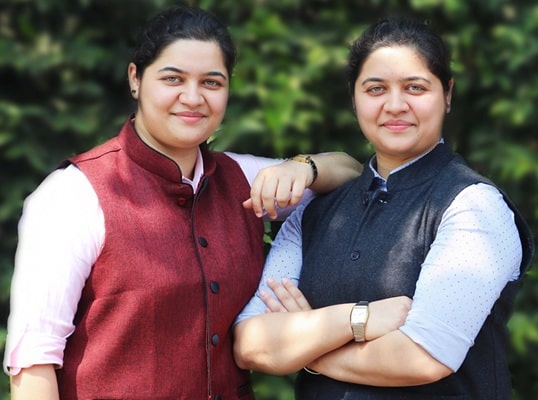
Q. What inspired you to start your journey, and what was the defining moment that made you take the leap?
A. The journey began with a simple question; why is energy storage still inefficient when the world is moving toward electric vehicles (EVs)? Growing up, I was curious about how nature solves problems in simple ways. When my co-founder Nishita and I looked closely at the EV transition, we saw that most solutions still relied on slow-charging, lithium-based batteries. That gap led us to rethink how batteries could be built more sustainably.
The defining moment came when we realised that crop residue could be used to create high-performance batteries. At first, the idea sounded unusual: turning agricultural waste into energy storage, but it also meant addressing air pollution and battery sustainability together. Taking the leap was less about having all the answers and more about believing the problem was worth solving, so we decided to build the technology ourselves.
Q. What were the biggest challenges you faced as a woman, and how did you overcome them?
A. One of the biggest challenges was credibility. In the deep tech and EV infrastructure space, which is largely male-dominated, people often assumed I was part of marketing rather than the founder of the battery company. In some meetings, investors would look past me, expecting a ‘technical’ male counterpart.
I dealt with this by focusing on expertise and results. I made sure the data, technical knowledge, and outcomes spoke for themselves. Over time, delivering strong results changed the conversation. What initially felt like a barrier eventually became part of the story of building something meaningful in a challenging industry.
Q. Did you face bias from others or self-doubt because of your gender?
A. Bias was often present in subtle ways. In the early days, being the only woman in the room meant my technical views were sometimes met with polite scepticism that others did not face. It created a situation where I often had to prove my point more than once.
Self-doubt was also natural at times, especially when the typical image of a founder rarely looked like me. Over time, I stopped trying to fit that image and realised that my different perspective could bring something valuable to the industry.
Q. Can you share a failure or setback that became a turning point in your growth?
A. Early in our R&D, we faced a challenge when a protein-based formulation for our battery cells failed to stabilise after months of work. The setback raised doubts and forced us to decide whether to move to conventional chemistry or continue with our organic approach. We chose to continue and re-examined the process at the molecular level, which led us to redesign the electrochemical architecture. During this work, we discovered a more efficient molecular structure that also enabled faster charging. The experience showed that in deep tech, failed experiments often lead to better solutions through persistence and iteration.
Q. How did your family or support system influence your journey, and how did you balance personal and professional responsibilities?
A. My family was the foundation that kept me going. They did more than support my work; they encouraged me to build something of my own. Having a co-founder from my family also meant we already had strong trust from the start. That helped us face challenges together while working on new energy storage ideas.
When it comes to balance, I see it less as a perfect split and more as a constant adjustment. Startup life demands a lot of time and focus. So instead of trying to divide time equally, I focus on being fully present. When I am working, I focus on the work. When I am with my family, I focus on them. It is about making each moment count.
Q. What keeps you motivated during tough times, and what belief has guided you throughout your journey?
A. What keeps me going is the scale of the problem we are trying to solve. On difficult days, when lab results are slow or funding takes time, I remind myself of the bigger goal: a future where energy does not harm the planet. The first time our organic plates held a charge, it was more than a technical result. It showed that a cleaner energy solution is possible.
The belief that has guided me is simple: innovation has no gender, but it requires courage. Being disruptive means staying committed even when things are uncomfortable. And if you are the only woman there, you should also be the one with the strongest data. Being the only woman in the room taught me that your perspective is your strength
Q. Have you introduced any changes in your organisation as a woman leader, such as inclusive policies, mentorship, or cultural shifts?
A. At Nexus Power, we focus not only on building better batteries but also on creating a supportive workplace. Today, around 65% of our team are women, which shows that deep-tech is about talent, not gender. We have introduced menstrual work-from-home policies to support employees without stigma. We also organise informal evening playdates where the team can relax and connect. In our workplace, ideas are evaluated only on their technical merit, regardless of role or gender. We also follow flexible, output-based work cycles, because many employees balance professional and personal responsibilities. Our goal is to create an environment where leadership is something people can shape in their own way.
Q. What common mistakes should aspiring women entrepreneurs/leaders avoid, and what would you do differently if starting today?
A. One common mistake is waiting to feel fully qualified before starting. When we began, we were business graduates with an idea, not chemistry PhDs. If we had waited for perfect credentials, Nexus Power would not exist. Many women also tend to over-explain or downplay their achievements. Humility is important, but leaders also need to be clear about their work and results.
If I were starting today, I would focus on building strong technical expertise earlier. I would also adopt a fail-fast mindset sooner and actively seek mentors. Asking for help is not a weakness; it can speed up learning. I would also spend less time trying to fit a typical founder image and focus more on building the company.
Q. How is the ecosystem evolving for women leaders/founders, and what message would you give to the next generation of women aspiring to be leaders like yourself?
A. The ecosystem is gradually moving from token representation to a stronger focus on talent. More women are entering fields such as deep tech, manufacturing, and infrastructure, areas that were once considered difficult for them. However, the journey is still unfolding, and many women are forging their own paths. For the next generation, resilience is important. Leadership often involves facing rejection and moving forward without losing sight of the purpose behind the work.
It is also important to pay attention to practical aspects of building a company or career. Strong documentation, such as intellectual property (IP) filings, clear contracts, and compliance, plays a key role in building trust and stability. Vision can open opportunities, but careful preparation and discipline help sustain them. Instead of only focusing on breaking barriers, the goal should be to build a strong foundation that makes those barriers less relevant in the future.
Q. What are the three things that society (or the other gender(s)) can undertake to make it easier for future women leaders to rise to the top?
A. To help the next generation of women leaders not just rise but thrive, three key shifts are essential. Household chores and caregiving must be normalised as gender‑neutral responsibilities, with both partners sharing invisible labour so women gain the mental bandwidth to focus on innovation and leadership. Mentorship should evolve into sponsorship, in which men in leadership actively advocate for women by backing them for key projects, promotions, or board roles, rather than simply offering advice. Finally, leadership needs to be de‑gendered, recognising that empathy, collaboration, and inclusive decision‑making are as powerful as traditionally masculine traits, ensuring a merit‑based system where diverse styles and the best ideas prevail.


