





Integrated power modules improve density and efficiency for data centres and EVs, while raising design considerations around cost, heat, and flexibility.
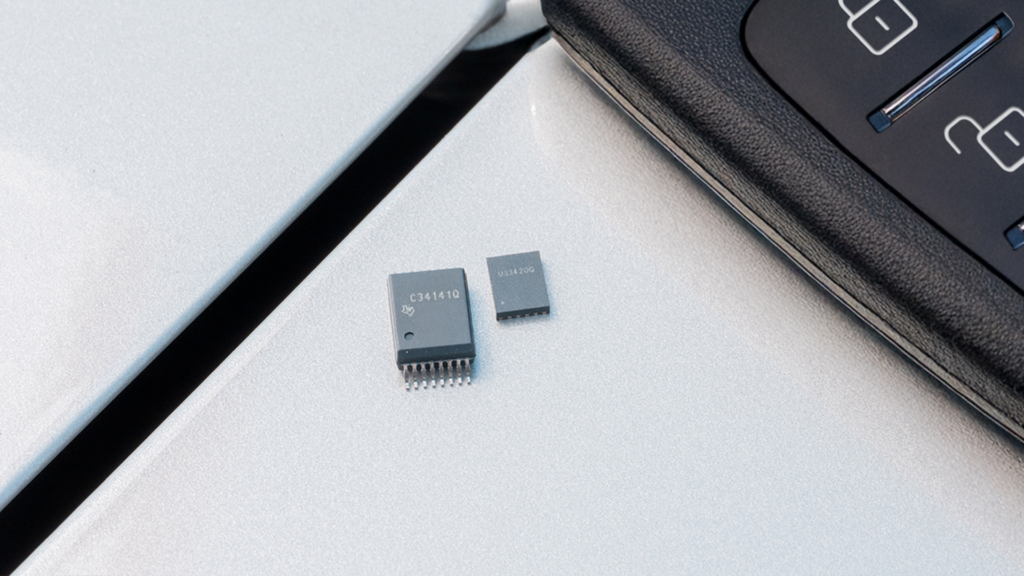
Texas Instruments (TI) has introduced two isolated power modules, the UCC34141-Q1 and UCC33420, aimed at improving power density and efficiency in applications such as data centres and electric vehicles (EVs).

The devices are based on TI’s proprietary IsoShield packaging technology, which integrates a planar transformer and isolated power stage into a single module. According to the company, this approach can deliver up to three times higher power density compared to traditional discrete designs, while reducing overall solution size by as much as 70%.
IsoShield technology reflects a growing industry trend toward advanced packaging as a way to improve performance when further chip-level miniaturization becomes challenging. By integrating multiple components into a compact footprint, the modules aim to simplify design and reduce board space.
The modules support different levels of isolation (functional, basic and reinforced), which is particularly relevant for automotive and industrial systems where safety requirements are stringent. TI also highlights support for distributed power architectures, which can help reduce single-point failures.
Power density improvements are increasingly important as data centers expand to support AI and cloud workloads, and as EV manufacturers push for longer range and more compact electronics. Modules like these aim to address those pressures, though their suitability depends on system-level trade-offs.
Integration allows more power in a smaller footprint, which is critical in space-constrained environments like server racks and EV systems. Pre-integrated components can reduce design complexity and development time. Tighter integration may improve performance consistency and reduce parasitic losses. Especially relevant for EVs, where weight and space directly impact range and efficiency.
However, compared to discrete designs, integrated modules offer less customization for specific design needs. Higher power density in a smaller space can make heat dissipation more difficult, depending on system design. While integration can reduce material and design costs, module pricing may still be higher upfront than discrete components in some cases. The modules are designed for relatively low power levels (up to around 2W), which may limit their use in higher-power applications.
Click here for the original announcement.



