




MIT’s hybrid AI system boosts robot coordination and throughput by preventing congestion in real time
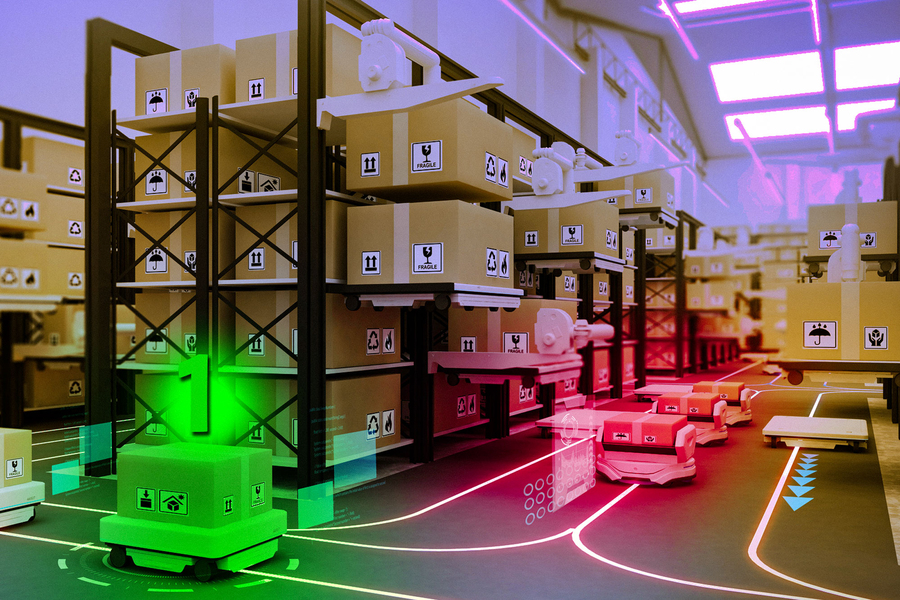
A new AI-driven system developed by researchers at MIT is tackling one of the biggest bottlenecks in automated warehouses: robot traffic congestion by dynamically coordinating fleets in real time. Modern e-commerce warehouses rely on hundreds of autonomous robots moving simultaneously to pick and transport goods. However, even minor slowdowns or collisions can cascade into major inefficiencies, sometimes forcing operations to halt entirely.

To address this, the researchers designed a hybrid system that combines deep reinforcement learning with classical planning algorithms. The AI model continuously analyses warehouse conditions and determines which robots should get priority at any given moment, effectively assigning real-time “right of way” to avoid congestion before it forms.
Unlike traditional rule-based systems designed by human experts, the new approach adapts dynamically to changing conditions. It identifies robots at risk of getting stuck and proactively reroutes them, rather than reacting after bottlenecks occur. The architecture operates in two layers: a neural network trained through simulation decides priority among robots, while a fast motion-planning algorithm translates those decisions into immediate navigation instructions. This hybrid design balances adaptability with reliabilitytwo critical requirements in high-density robotic environments.
Performance gains are significant. In simulations modelled on real warehouse layouts, the system improved throughput by approximately 25% compared to existing approaches. Even marginal efficiency gains are valuable at scale, as small percentage increases can translate into substantial operational and financial impact. Another key advantage is scalability. The trained model can generalise across different warehouse configurations, robot densities, and layouts without requiring redesign, making it suitable for diverse logistics environments.
The research reflects a broader shift toward AI-driven coordination in physical systems, where machine learning is combined with established optimisation techniques to overcome the limitations of each. Pure AI models often struggle with complex constraints, while traditional algorithms lack flexibilitytogether, they enable more robust real-world performance. Looking ahead, the team plans to extend the system to include task-assignment decisions and scale it for warehouses with thousands of robots. If successfully deployed, the approach could significantly enhance efficiency in automated logistics and smart manufacturing environments.

