




In a world overflowing with information, NeoSapien presents India’s first AI-Native wearable designed to transform memory into a dynamic, evolving intelligence.
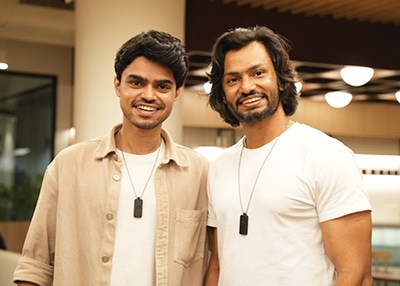
NeoSapien Private Limited is a Bengaluru-based startup founded in 2024 by Dhananjay Yadav and Aryan Yadav.
The company has developed an AI-powered wearable that acts as a user’s second brain, capturing everyday conversations, transcribing them, and building an intelligent relationship graph that connects people, facts, priorities, and commitments over time.
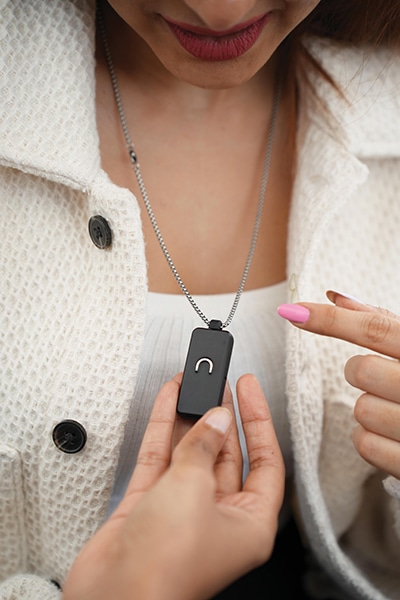
Dhananjay notes that, unlike traditional meeting note-taking apps limited to scheduled virtual calls, NeoSapien’s device functions as an always-on ambient conversational intelligence system that captures both offline interactions, including informal conversations, and online discussions.
It recognises different speakers through advanced speaker diarisation, transcribes conversations with high accuracy, and continues to learn from each interaction. Over time, it maps relationships between users and their contacts, organising contextual information that can be accessed and retrieved as needed.
The startup states that the device functions without internet connectivity, capturing offline conversations and meetings and transferring data to the user’s phone via Bluetooth.
However, advanced processing—such as transcript generation, speaker identification, and the extraction of tasks, priorities, and calendar invites—occurs in the cloud and requires internet access. If connectivity is unavailable, the mobile application securely stores the data and processes it once the connection is restored. This ensures that conversations and associated data are retained.
The startup reports a speaker accuracy rate of 98.26 per cent across Indic languages such as Hindi, Kannada, and Gujarati, along with a numerical accuracy of 91.59 per cent.
Audio is processed in encrypted memory and not persistently stored. Raw audio is discarded after transcription, reducing storage requirements. According to Dhananjay, even years’ worth of transcribed data occupies significantly less digital space than recorded files.
The intelligence layer is built on a proprietary knowledge graph algorithm that connects conversations over time. If a user meets someone multiple times, the system tracks prior discussions, identifies pending tasks, and generates contextual outputs such as pre-read documents, draft emails, or calendar blocks.
The system is described as encrypted, with data processing conducted securely in the cloud. The startup is working towards SOC2 certification standards and states that users retain control over the data they choose to share. The wearable links to a user’s email ID and uses voice fingerprinting to ensure that only authorised individuals can access stored data. Even if the device is lost, the data remains protected through account-level security.
While the startup works with specialised vendors for component manufacturing, final quality control takes place in Bengaluru. “Most of the team’s effort, however, is concentrated on software, artificial intelligence, and backend infrastructure rather than hardware assembly,” explains Dhananjay.
The startup currently operates with an 11-member team. Production capacity allows the manufacturing of up to 5000 devices per month. The wearable is priced at `12,000, includes a two-year warranty, and comes with a companion mobile application for setup and integration.
The startup primarily targets entrepreneurs, business owners, busy professionals, journalists, and on-field sales teams.
Revenue is currently driven by device sales and expanding B2B deployments. The company is also exploring licensing its proprietary Neo OS to larger hardware manufacturers, indicating a potential shift from device manufacturing to AI operating system development.
Dhananjay states that the name NeoSapien reflects a new phase in human evolution. Although the creation of information has grown rapidly in recent years, human memory has not kept pace. The product is positioned as a tool to augment human intelligence rather than replace it.
Future plans include expanding desktop applications and adding advanced automation features such as calendar integration and pre-read generation before meetings.


