




New compute platform brings AI processing, rich I/O, and multimedia performance closer to industrial and embedded edge deployments.
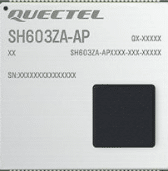
New compute platform brings AI processing, rich I/O, and multimedia performance closer to industrial and embedded edge deployments.
A new smart module by Quectel Wireless Solutions for edge computing is pushing more AI processing directly onto devices, reducing reliance on cloud infrastructure and enabling real-time decision-making across industrial and commercial systems.
Designed as an application-processor platform, the module integrates an octa-core CPU architecture with four Cortex-A72 and four Cortex-A53 cores, paired with a Mali G52 GPU and a neural processing unit delivering up to 6 TOPS of AI performance. This combination allows it to handle vision-based workloads, automation tasks, and AI inference locally on the device.
The module is built around a high-performance chipset platform and targets edge AI use cases where compute, multimedia, and interface flexibility must coexist. It supports 8K video decoding and 4K encoding, making it suitable for applications such as smart displays, video analytics, and industrial human-machine interfaces.
The key features are:
- Octa-core CPU with integrated GPU and 6 TOPS NPU
- Supports 8K decoding and 4K video encoding
- Extensive industrial and multimedia I/O interfaces
- Multiple OS support, including Linux and Android
- Modular connectivity via external wireless integration
A key differentiator is its extensive I/O support. The platform integrates interfaces spanning camera inputs, display outputs, storage, and industrial connectivity protocols, including PCIe, USB, SATA, CAN, and UART. This reduces the need for complex carrier board redesigns and accelerates product development cycles for OEMs building edge devices. Unlike fully integrated modules, it lacks built-in connectivity. Instead, it supports external wireless modules such as Wi-Fi, Bluetooth, and cellular, enabling developers to tailor connectivity to deployment requirements and regional standards.
The module supports multiple operating systems, including Linux, Android, Ubuntu, and Debian, along with configurable memory options, enabling scalability across different product tiers. It is designed for long lifecycle deployments, with availability projected into the next decade—an important factor for industrial IoT applications. With edge AI increasingly shifting toward on-device intelligence, such platforms highlight a growing trend: combining compute, multimedia, and interface density into compact modules that simplify integration while enabling smarter, autonomous systems across industries.
Click here for the original announcement.


