

Timing technology aims to improve synchronization across AI GPU clusters, reducing drift and wait cycles to improve utilization, throughput, and energy efficiency.
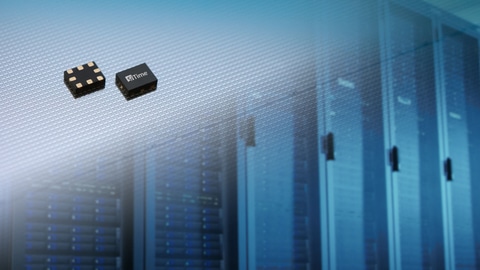
SiTime Corporation has introduced the Elite 2 Super-TCXO, a timing device aimed at improving synchronization across AI data center GPU clusters, where timing precision has become a growing constraint on compute efficiency.
The product is designed to support sub-nanosecond synchronization accuracy, exceeding the industry’s emerging 10-nanosecond target for AI cluster synchronization. The tighter timing control is intended to reduce drift between GPUs, helping improve utilization, throughput, and performance per watt in large-scale AI systems.
Synchronization has become increasingly important as AI workloads are distributed across large numbers of GPUs that must operate within tightly coordinated time windows. Even small timing errors can force GPUs to wait for one another to avoid data corruption, reducing overall efficiency. In more severe cases, timing mismatches can trigger GPU timeouts or system restarts.
That inefficiency is significant. Industry estimates put GPU utilization in AI clusters at roughly 20% to 40%, leaving substantial compute capacity underused. As AI infrastructure scales, improving synchronization accuracy is becoming one way operators can recover lost performance without adding hardware.

The push toward tighter synchronization marks a major shift from the current industry standard of 1 microsecond to a 10-nanosecond target. SiTime said its work with hyperscalers and silicon providers highlighted oscillator performance as a core requirement for reaching that threshold, leading to the development of the Elite 2 Super-TCXO.
The device is built to improve thermal and short-term stability, which helps maintain timing consistency under changing operating conditions. In AI data centers, that stability can reduce synchronization-related bottlenecks and support more efficient cluster operation.
“AI networks must operate with extremely high efficiency to fully utilize expensive GPU resources,” said Sameh Boujelbene, vice president at Dell’Oro Group. “As AI back-end infrastructure refreshes at a much faster cadence than traditional non-accelerated infrastructure, time synchronization accuracy becomes increasingly important to sustaining performance across rapidly evolving data center architectures.”
Click here for the original announcement.