A robot that combines adaptive mobility, dexterous manipulation, and continuous learning AI to operate across real world work environments without fixed task programming.
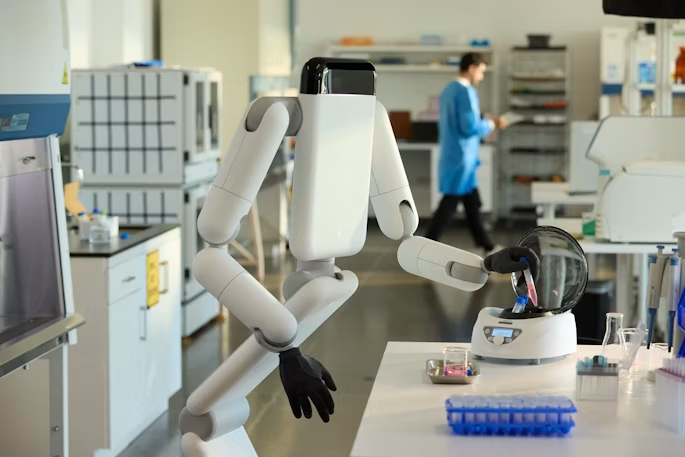
Genesis AI has unveiled Eno, a general purpose robot designed to function across industrial and service environments by combining mobility, manipulation, and AI driven task execution.
While traditional industrial robots are typically optimized for repetition in fixed environments, which limits flexibility when workflows change or when deployment moves outside structured factory lines, the system is positioned as a unified hardware and software platform intended to operate in settings where humans already work, rather than in isolated or highly controlled robotic zones.
The robot uses a wheeled base for navigation, topped with an articulated vertical structure that can extend or compress depending on workspace needs. At its core are robotic hands designed to replicate human hand structure, enabling interaction with tools and objects already common in workplaces.
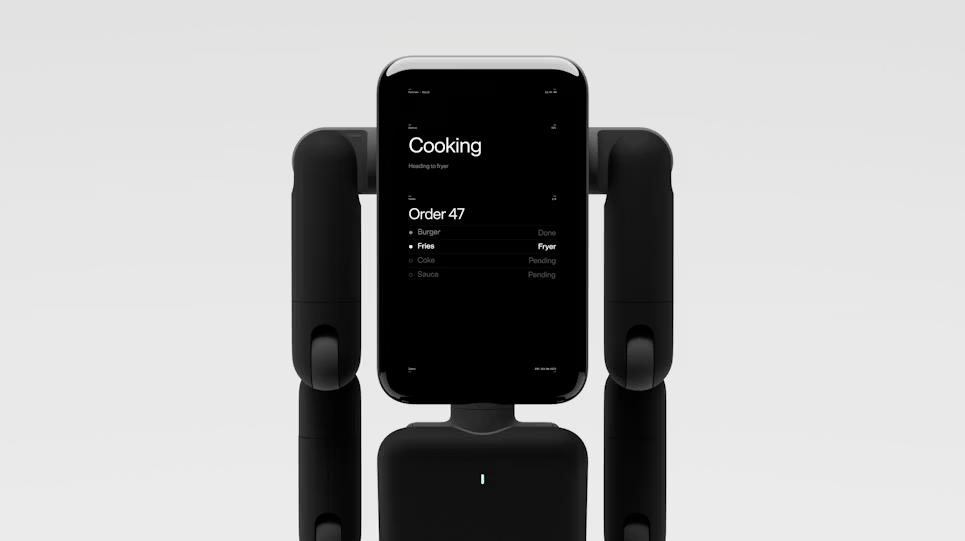
A key element of the system is its integrated AI platform, referred to as GENE, which functions as a control and planning layer. Instead of responding only to individual commands, the system is designed to interpret higher level objectives, maintain context across tasks, and adjust actions based on environmental changes. This allows multi step workflows to be executed with reduced manual intervention.
By combining perception, planning, and physical execution, the robot is intended to handle extended operations such as material movement, equipment handling, and basic facility coordination. The design emphasizes continuous interaction with surrounding systems rather than isolated task completion.
The platform is also structured around human compatible interaction. A proposed transparency interface is intended to display operational state and decision flow, allowing nearby workers to understand what the system is doing during execution. This is aimed at improving predictability in shared human robot environments.
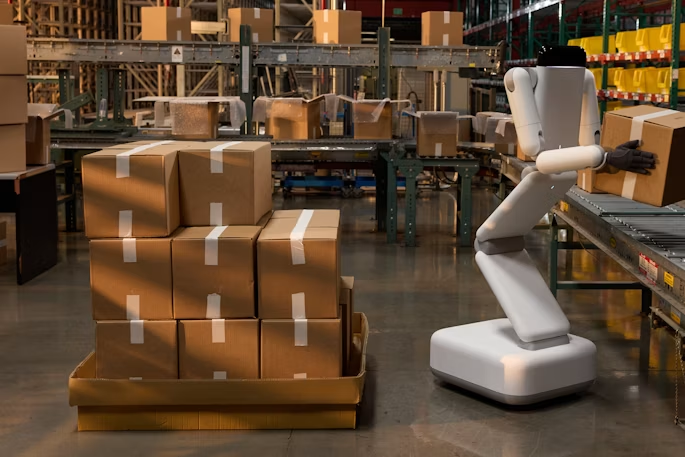
The company plans to begin limited customer deployments by the end of 2026, initially targeting manufacturing, logistics, and laboratory environments before expanding into service sectors such as hospitality and healthcare. Future iterations are expected to extend into home and outdoor applications as the platform matures.
Click here to find the official announcement.