




A bio-inspired robotic bird that reveals how kestrels maintain stable flight in turbulence, paving the way for more resilient drones and next-generation autonomous aircraft.
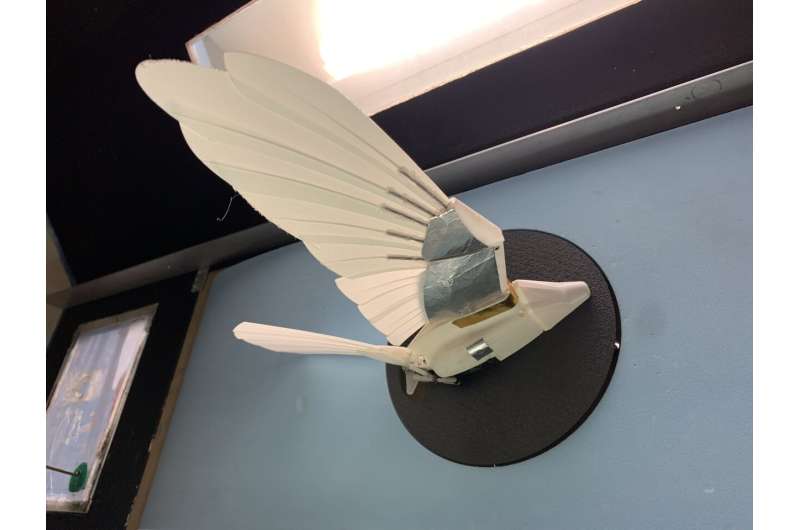
A bio-inspired robotic bird developed by researchers at RMIT University and the University of Bristol is providing new insights into how birds maintain stable flight in turbulent conditions, offering a blueprint for designing more resilient small unmanned aerial vehicles (sUAVs). The robotic platform replicates the key movements of a nankeen kestrel, allowing engineers to quantify the aerodynamic mechanisms that enable birds to hover and maneuver in gusty environments.

The research addresses a growing challenge for drone operations as atmospheric turbulence is expected to become more frequent and intense. Current sUAVs used for aerial inspection, search and rescue, agriculture and parcel delivery often struggle in turbulent air, limiting their operational reliability. By studying birds that naturally thrive in such conditions, researchers aim to improve flight stability and control systems for autonomous aircraft.
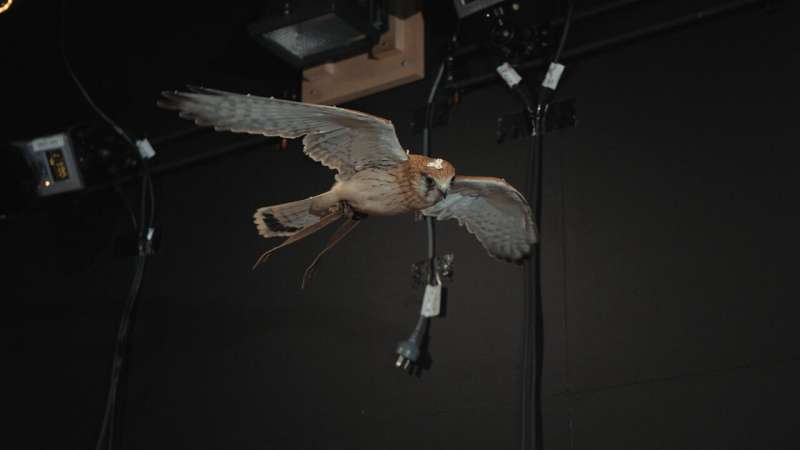
To investigate these capabilities, the team first tracked live nankeen kestrels using motion-capture technology inside RMIT’s industrial wind tunnel. The recorded wing, tail and body movements were then reproduced in a robotic replica capable of precisely mimicking the bird’s flight behavior. Unlike live-animal studies, the robotic platform allows researchers to isolate individual motions and directly measure the aerodynamic forces contributing to stable hovering and turbulence rejection.
The experiments showed that kestrels rely on coordinated wing and tail morphing, rapid body adjustments and the natural flexibility of feathers and joints to absorb sudden airflow disturbances. Rather than depending on a single corrective action, the birds continuously adapt multiple control surfaces while sensing changes in airflow almost instantaneously. The robotic bird enabled researchers to quantify how these coupled movements enhance flight stability, generating data that can be translated into advanced drone flight-control algorithms.
The findings were published in two papers in the Journal of the Royal Society Interface and form part of a multi-year collaboration focused on bio-inspired flight technologies. Researchers plan to further investigate how kestrels detect subtle airflow changes before integrating similar sensing and adaptive control strategies into future aircraft. While the current work targets small drones, the team believes the underlying principles could eventually improve turbulence mitigation and flight efficiency in larger autonomous and conventional aircraft.


