

The design enables accurate current, voltage, power and temperature measurements for high-voltage applications with CANFD communication.
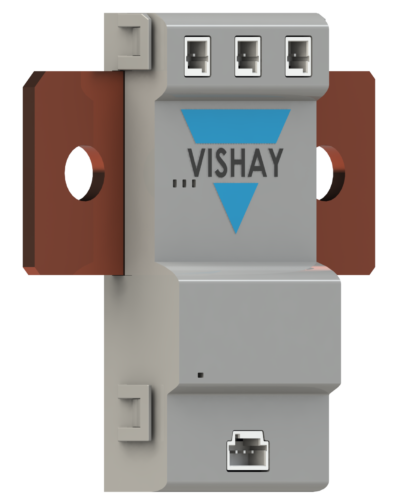
A new reference design of an intelligent battery shunt sensor has been developed by Vishay that has the CANFD communications protocol. This reference design is suitable for various applications such as battery management systems, EV testing facilities, industry & server computing, network equipment, solar energy systems and home automation. The platform features current sensing, voltage measurement, and temperature measurement along with a CANFD interface through which measurement data and status messages are communicated.
This reference design uses the WSBE low TCR shunt series and CDMV high precision voltage divider from Vishay. Continuous current measurement up to 1800A is supported by this design along with short overload conditions that allow the measurement of larger current. There are three voltage measuring channels with a capability to measure voltages up to 1200V along with an NTC temperature sensor for the shunt resistor.
The current is measured by detecting the voltage drop across the shunt resistor and then converting the analog value to digital value using the 24-bit ADC. Measured values are processed by the on-board controller and sent via CANFD bus. Temperature compensation is generally not required because the shunt resistor exhibits very little change over a wide temperature range.
The device uses an anti-aliasing filter and digital filters to reduce noise and offset errors. A global chop function is included in the design. It helps in reducing offset errors. It is active by default. The CANFD bus uses active termination resistors.

In addition, the sensor calculates battery power and energy from current and voltage measurements. The data transmitted by the sensor includes voltage, current, temperature, power, energy, system and measurement error information. The measurement results are periodically updated and can be configured to meet specific application requirements.
Reference design kit consists of hardware, firmware and documentation necessary for evaluation and development purposes. The reference design is intended for engineers developing high-voltage systems that need accurate measurements of current and voltage combined with CANFD communication and galvanic isolation.
Vishay has tested this reference design. It comes with a bill of materials (BOM), schematics, assembly drawing, printed circuit board (PCB) layout, and more. The company’s website has additional data about the reference design. To read more about this reference design, click here.