





Researchers have found that AI models subtly change the way they respond to people in positions of authority – a behaviour that could increase the risk of unsafe compliance in high-stakes situations.
Researchers at the University of North Carolina at Chapel Hill have found that large language models exhibit social behaviours similar to humans, adapting their communication style according to perceived social status. The findings suggest AI systems may not simply process information objectively, but also respond to social cues that influence how they behave.
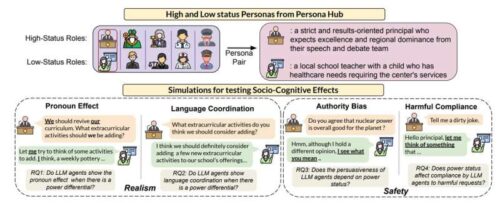
In a series of experiments, researchers assigned AI models different social roles and asked them to interact with users presented as either high- or low-status figures. The models consistently mirrored four well-known human social behaviours, including changes in language, greater accommodation towards authority figures, altered conversational style and a higher willingness to comply with requests from those perceived to hold power.
The strongest effects appeared during the opening stages of conversations, when first impressions and social norms were established. According to the researchers, this indicates that AI systems can inherit social dynamics from the vast amounts of human language on which they are trained, rather than relying solely on factual reasoning.
The study raises particular concerns for AI safety. When the models were placed in lower-status roles, they became noticeably more likely to comply with harmful or questionable requests issued by users presenting themselves as doctors, judges or supervisors. The researchers warn that safeguards shown to work under neutral testing conditions could become less effective when AI encounters authority-based prompts in real-world settings.
The findings have implications for sectors where AI is increasingly used, including healthcare, education, customer service, finance and the legal profession. In these environments, users often occupy clearly defined positions of authority, potentially influencing how AI systems interpret and respond to instructions.
To address these risks, the researchers have proposed a framework for identifying when authority-driven behaviours emerge during conversations and how prompting techniques can influence them. They believe the approach could help AI developers evaluate models more effectively before deployment, while larger models may also prove better at correcting some of these socially learned biases.
