




What if you could see inside a sealed package without opening it? An inspection system does that and finds hidden defects and missing parts.
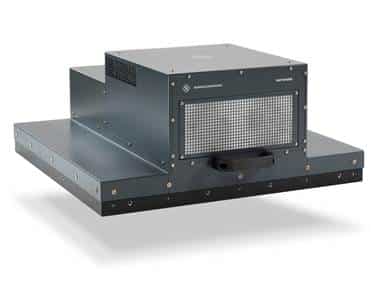
Rohde & Schwarz has expanded its real-time millimeter wave inspection portfolio with the R&S IMAGER, a system that inspects sealed products without opening their packaging. Using millimeter waves and AI-based image analysis, the system creates three-dimensional images that reveal hidden components, material defects, and assembly errors across pharmaceutical, logistics, and food production lines.
The R&S IMAGER sends non-ionizing millimeter waves through packaging materials and captures the reflected signals using a sensor array. It then converts the data into detailed internal images, allowing manufacturers to inspect products that cannot be checked through conventional camera-based or weight-based systems.
In pharmaceutical manufacturing, the system inspects sealed packages without affecting the medicines inside. Millimeter waves pass through cardboard cartons, laminated seals, and other secondary packaging to verify the presence and correct placement of syringes, needles, autoinjectors, and other components. It generates a three-dimensional image of every package at production speed, while AI detects missing or incorrectly assembled parts. This helps manufacturers improve quality control, meet regulatory requirements, and reduce product recalls.
In logistics, the system verifies the contents of sealed packages that cannot be confirmed through weight checks or external inspection alone. It scans through plastic, cardboard, and composite materials to identify missing items, misplaced products, or internal damage. Integrated with conveyor systems, it continuously inspects packages and uses AI to detect anomalies in real time, reducing manual checks while improving inventory accuracy and supply chain documentation. It also enables reliable inspection of products packed in more sustainable packaging materials.
For food and beverage production, the R&S IMAGER inspects sealed cartons, multipacks, and glass containers without opening them. It detects missing items, damaged products, sealing defects, and vacuum loss in glass bottles while production lines continue to operate at full speed. Because it uses non-ionizing millimeter waves, the inspection process does not affect food quality. Early defect detection helps manufacturers reduce waste, improve product quality, and extend shelf life.
Click here for the original announcement.


