






A 4nm chip and driver-assistance system are being added to more electric cars, including lower-cost models, to support driving assistance features.
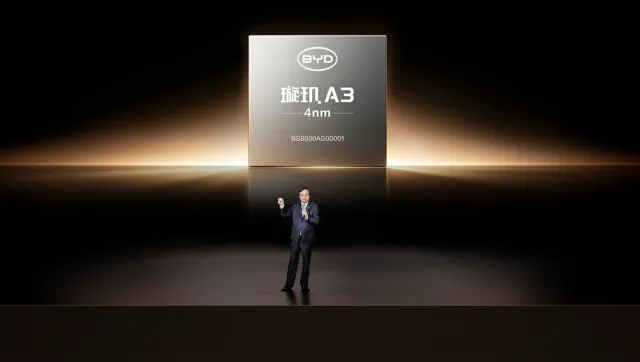
BYD has introduced the Xuanji A3, a 4nm automotive chip designed for self-driving vehicles, while expanding its God’s Eye driver-assistance system to entry-level electric cars in China. The move marks the company’s biggest push yet into automotive artificial intelligence (AI) as competition intensifies and slowing domestic sales put pressure on growth.
The Xuanji A3 delivers 700 TOPS (trillion operations per second) of AI computing performance. BYD says three chips can work together to provide 2,100 TOPS, enough to support Level 3 and Level 4 autonomous driving functions. The chip has already entered mass production and will serve as the computing engine for the company’s next-generation intelligent vehicles.
Instead of using separate processors for different vehicle functions, BYD has built a central computing platform around the new chip. It combines the smart cockpit, advanced driver-assistance system (ADAS), and electric powertrain controls into a single architecture. The company also claims the chip consumes about 20 per cent less power than comparable automotive processors.
According to the company, more than 3.15 million vehicles equipped with its ADAS hardware are already on the road. These vehicles generate around 200 million kilometres of driving data every day, which BYD uses to improve its algorithms through cloud-based AI training and reinforcement learning. The company says software updates are developed in cycles of about three days.
The technology announcements come at a time when BYD is facing growing business pressure. The company has recorded eight straight months of year-on-year sales declines. In the first quarter of 2026, net profit fell 55 per cent to 4.09 billion yuan, while revenue dropped 12 per cent to 150.2 billion yuan. Heavy investment in intelligent driving technology and an ongoing price war in China’s EV market have reduced margins.
With the Xuanji A3 and the broader rollout of God’s Eye, BYD is trying to shift attention from price competition to vehicle intelligence. By combining its own chip, software, and vehicle platforms, the company is positioning AI as the next stage of competition in the EV market.

